
Fitness and wellness represent far more than temporary workout routines or fleeting motivation. They form the foundation of sustainable physical development, combining biomechanical precision, behavioral psychology, and strategic program design. Whether you’re stepping into a gym for the first time or refining years of training experience, understanding the core principles that govern human movement, adaptation, and habit formation determines the difference between sporadic effort and measurable, lasting progress.
This comprehensive resource connects the essential pillars of effective fitness practice: the psychological frameworks that make consistency possible, the mechanical principles that prevent injury while maximizing results, and the evidence-based training strategies that optimize your limited time and energy. From squat biomechanics to core stability, from habit architecture to leg hypertrophy protocols, you’ll discover how these interconnected elements work together to transform fitness from an intimidating challenge into a logical, achievable system.
The gap between fitness intentions and actual results rarely stems from lack of knowledge about exercises. Instead, it originates from behavioral friction—the accumulated small barriers that make skipping workouts easier than completing them. Understanding the psychology of habit formation transforms fitness from a willpower battle into an environmental design challenge.
Every obstacle between you and starting your workout acts as a decision point where motivation can fail. Choosing a gym located less than ten minutes from your home or workplace eliminates the rationalization that distance provides. Preparing workout clothes the night before removes morning decision fatigue. These seemingly minor adjustments address the reality that human behavior follows the path of least resistance—your goal is to make exercise that path.
This behavioral principle states that new habits should take less than two minutes to start. Rather than committing to a full workout, commit only to changing into gym clothes or completing a single warm-up set. This psychological trick bypasses the mental resistance that surrounds large commitments. Pair this with consistent workout times—training at the same hour creates temporal cues that trigger automatic behavior, reducing the daily negotiation about whether and when to exercise.
Consistency compounds more powerfully than intensity. The “break-chain effect” describes how a single missed workout psychologically justifies a second, then a third, until momentum vanishes entirely. Building social accountability through training partners or public commitment creates external pressure that sustains behavior when internal motivation wanes. The key insight: habit formation depends more on frequency than perfection. Missing one planned session matters far less than immediately resuming your schedule.
Time remains the most common barrier to consistent training. Effective program design maximizes adaptation while respecting real-world schedule constraints through strategic exercise selection, rest interval manipulation, and workout density optimization.
Rest periods directly influence both workout duration and training stimulus. Strength-focused training typically requires two to five minutes between heavy compound sets, allowing full neuromuscular recovery. Hypertrophy work functions optimally with 60 to 90 seconds, creating metabolic stress while maintaining performance. Conditioning work may use 30 seconds or less. Matching rest intervals to your primary goal prevents wasted time while ensuring adequate recovery for quality repetitions.
This technique pairs exercises targeting opposing muscle groups—chest and back, quadriceps and hamstrings—performed with minimal rest between movements. While one muscle group works, its antagonist recovers. This approach can reduce total workout time by up to 40% compared to traditional straight sets while maintaining or even enhancing performance through a phenomenon called reciprocal facilitation. A practical example: alternating barbell rows with bench press sets.
Busy gym environments create bottlenecks around popular equipment. Structuring your workout to flow logically through available stations—rather than rigidly following a predetermined order—maintains training density. Begin with exercises requiring specialized equipment (squat racks, benches), then transition to more flexible movements (dumbbells, cables, bodyweight) as the gym fills. This strategic flexibility prevents the momentum-killing experience of waiting ten minutes between sets.
The squat represents the most fundamental human movement pattern, yet improper mechanics accelerate joint degradation while limiting performance potential. Understanding individual anatomical variation and addressing mobility constraints prevents the chronic wear that shortens training longevity.
Hip socket depth, femoral neck angle, and acetabular orientation vary dramatically between individuals—variations that determine optimal squat stance and achievable depth. What appears as “poor form” often reflects anatomical reality rather than inadequate coaching. Some athletes achieve comfortable depth with a narrow stance, while others require significantly wider positioning. Experimenting with stance width and foot angle until you find pain-free, deep squatting reveals your individual biomechanical blueprint.
This term describes posterior pelvic tilt at the bottom of a squat—the moment when your lower back rounds as your hips tuck under. While minor butt wink poses little injury risk, excessive rounding under heavy loads stresses spinal structures. This phenomenon typically results from either reaching beyond your anatomical hip depth or insufficient hamstring flexibility. Solutions include limiting squat depth to where spinal position remains neutral, improving posterior chain mobility through targeted stretching, or adjusting stance to accommodate your hip structure.
High bar squats position the barbell on the upper traps, creating a more upright torso and emphasizing quadriceps engagement. Low bar placement rests the bar across the rear deltoids, allowing greater forward lean and increased hip and glute involvement. Neither is inherently superior—your choice depends on limb proportions, mobility, and training goals. Lifters with long femurs relative to their torso often find low bar positioning more mechanically efficient, while those targeting maximal quad development may prefer the high bar variant.
Knees collapsing inward during squats—knee valgus—signals either weak hip abductors or learned motor patterns. This compensation increases ACL stress and reduces force production. Cueing “knees out” while strengthening glute medius through lateral band work corrects this pattern. Simultaneously, limited ankle dorsiflexion forces compensatory forward lean or premature heel lift. Elevated heel shoes or targeted ankle mobility work allows a more upright torso position, reducing lower back strain and improving squat depth.
Moving beyond basic squatting patterns, targeted hypertrophy work isolates specific muscle groups through strategic exercise selection and mechanical tension manipulation. Understanding these principles allows you to address weak points and maximize muscle growth.
The teardrop-shaped muscle above the inner knee—vastus medialis oblique (VMO)—provides knee stability and contributes to complete quad development. While you cannot completely isolate any single quad head, terminal knee extension exercises emphasize VMO engagement. Leg extensions performed through the final 30 degrees of motion, or pause squats held just above parallel, preferentially load this region. Combining these movements with full-range compound work ensures balanced development.
Muscle hypertrophy requires sufficient mechanical load—weight that challenges muscles through their full range of motion. While metabolic stress and muscle damage contribute to growth, progressive tension overload remains the primary driver. This means consistently adding weight, repetitions, or sets over time. Training logs become essential tools, transforming workouts from random effort into measurable progression toward quantifiable strength standards.
Free weight movements recruit stabilizer muscles and develop functional coordination, making them foundational for comprehensive development. However, machines offer unique hypertrophy advantages: fixed movement paths allow training closer to muscular failure without injury risk, and pre-exhausting target muscles before compound movements enhances mind-muscle connection. An effective leg program incorporates both—squats and deadlifts for overall strength and neural adaptation, leg presses and extensions for targeted volume accumulation.
Many lifters unconsciously shift lower body exercises toward hip extension, minimizing quad involvement. This pattern appears in squats that resemble good mornings, or leg presses where glutes dominate the movement. Correcting this requires deliberate attention to knee flexion depth, maintaining tension through the quads rather than settling into the hips, and occasionally incorporating quad-isolation exercises before compound movements to establish proper neural activation patterns.
Calisthenics develops remarkable upper body strength, control, and athleticism using minimal equipment. However, progressive overload with bodyweight requires understanding leverage manipulation, movement variations, and strategic intensity techniques that replace simply adding external weight.
Wrist strain represents the most common calisthenics injury, often resulting from inadequate conditioning or poor positioning. Gradually building wrist strength through gentle mobility work and supporting exercises prepares connective tissue for the demands of push-ups, handstands, and planches. Hand angle adjustments—fingers pointing slightly outward rather than straight ahead—reduce wrist extension demands during pressing movements, while parallettes or push-up handles maintain more neutral wrist alignment.
This fundamental gymnastics position—characterized by posterior pelvic tilt, engaged abs, and slight body curve—forms the foundation of advanced calisthenics movements. Lying on your back with lower back pressed firmly to the floor, arms extended overhead, and legs elevated creates the basic hollow hold. This position teaches full-body tension transfer essential for levers, handstand holds, and dynamic movements. Mastering static holds before progressing to hanging variations builds the core strength that prevents compensation patterns.
Since you cannot simply add weight to bodyweight exercises, progression follows leverage modification. Push-ups advance from wall angles to incline to flat ground to decline to pseudo-planche variations. Pull-ups progress through negative repetitions, band assistance, full range movements, weighted versions, and eventually one-arm variations. Each adjustment shifts the resistance curve, demanding continued adaptation. The key principle: reduce leverage or add complexity only after mastering current movement quality for the target repetition range.
Visible abs and functional core strength represent related but distinct qualities. While both matter, understanding the difference between spinal stability and aesthetic development prevents program imbalances and reduces injury risk during compound lifts.
Your core’s primary function involves resisting unwanted movement rather than creating it. Anti-extension exercises—planks, dead bugs, rollouts—train the deep stabilizers (transverse abdominis, multifidus) to maintain neutral spine position against external forces. This capacity directly transfers to squat and deadlift performance, where core stability determines how much force you safely transmit through your trunk. Strong abs prevent spinal hyperextension under heavy loads, protecting intervertebral discs and maximizing power transfer.
Holding planks for three to five minutes demonstrates endurance but provides diminishing returns for strength or stability development. Once you can maintain perfect position for 60 seconds, progression should involve reducing leverage (feet elevated), adding instability (single arm or leg), or incorporating movement (plank walkouts). Training core stability mirrors other strength work: progressive overload through increased difficulty, not simply extended duration of the same stimulus.
Standard planks emphasize anti-extension. Side planks target anti-lateral flexion, training the obliques to resist unwanted sideways bending. Stir-the-pot planks on a stability ball add anti-rotation demands. Copenhagen planks stress hip adductors alongside lateral core muscles. Each variation addresses different stability vectors—comprehensive core development requires training all movement planes rather than endlessly repeating a single exercise pattern.
Abdominal definition results primarily from low body fat percentage, not specific exercises. You can develop exceptional core strength and stability while carrying sufficient body fat to obscure muscle definition—and conversely, visible abs don’t guarantee functional strength. The stomach vacuum, an isometric contraction of the transverse abdominis, may improve waist appearance and mind-muscle connection but offers limited functional transfer. Prioritize compound stability work for performance, understanding that aesthetics emerge primarily through nutritional management of body composition.
Fitness and wellness ultimately represent the intersection of intelligent programming, biomechanical understanding, and behavioral design. The principles outlined here—from habit friction reduction to squat mechanics, from training density to core stability—provide the framework for sustainable development. Progress emerges not from perfect execution but from consistent application, gradual progression, and thoughtful adjustment as you learn your body’s individual responses and requirements.

Protecting your spine isn’t about having visible abs; it’s about building an invisible, functional ‘corset’ of deep stability muscles. The “six-pack” muscles (outer unit) are for movement, while the deep “inner unit” muscles are for stabilization and preventing injury. Effective…
Read more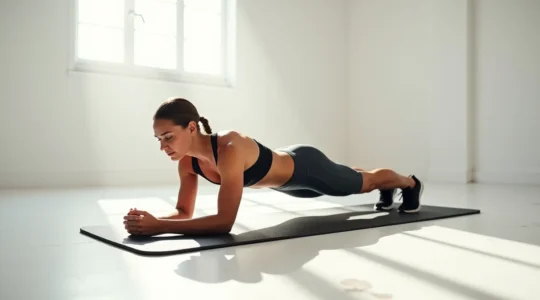
In summary: Holding a plank for more than two minutes offers diminishing returns; form and tension are more important than duration. Proper breathing mechanics (breathing “behind the shield”) dramatically increase core activation and spinal stability. Side planks are essential for…
Read more
In summary: Breaking push-up plateaus requires mastering movement mechanics, not just adding reps. Shoulder pain is often caused by poor form like wide grips; prioritize shoulder-width push-ups with proper scapular movement. True strength comes from total body tension. Treat the…
Read more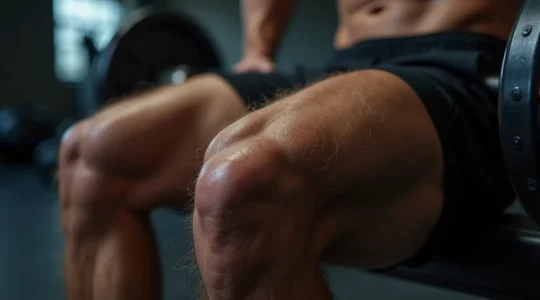
Stop thinking heavy squats are the only path to massive thighs. The brutal truth is, they might be what’s holding you back. True quad growth is unlocked by maximizing time-under-tension and metabolic stress, not just the weight on the bar….
Read more
The secret to a deep, pain-free squat isn’t more mobility; it’s understanding and adapting to your unique anatomical structure. Your hip socket anatomy dictates your natural squat stance, and forcing a “toes forward” position can cause injury. Lower back rounding…
Read more
Stop blaming your lack of willpower. True exercise consistency comes from systematically outsmarting your brain’s built-in resistance, not overpowering it. Your environment, not your motivation, dictates your actions. Design it to make exercise the path of least resistance. Lower the…
Read more
The key to a true 35-minute workout isn’t intensity, but the ruthless elimination of systemic time waste. Hidden “time-thieves” like phone scrolling, gym commutes, and equipment transitions secretly add 30-60 minutes to a typical session. Optimizing workout density through strategic…
Read more