
Whether you’re stepping onto a football pitch, basketball court, or volleyball arena, team sports demand a unique blend of physical prowess, tactical intelligence, and mental resilience. These disciplines challenge athletes to master individual skills while synchronizing with teammates, adapting to opponents, and making split-second decisions under pressure. The complexity can feel overwhelming for newcomers, yet understanding the fundamental pillars of team sport performance transforms confusion into confidence.
Success in team sports extends far beyond natural talent. It requires deliberate development across five interconnected domains: tactical organization that shapes how teams move and create opportunities, defensive systems that neutralize opponents, cognitive abilities that sharpen decision-making, athletic capabilities that enable explosive actions, and injury prevention strategies that ensure longevity. This comprehensive exploration unpacks each dimension, providing the foundational knowledge you need to approach team sports with clarity and purpose, whether you’re coaching an amateur squad or elevating your own game.
Every successful team operates within a structured framework that defines player positioning, responsibilities, and movement patterns. These tactical systems provide the blueprint for both attacking creativity and defensive stability.
Formations represent the spatial arrangement of players across the playing area, creating numerical advantages in specific zones. In football, a 4-3-3 formation emphasizes width and attacking penetration, positioning three forwards to stretch defensive lines while maintaining midfield control. Contrast this with a 5-4-1 setup, which prioritizes defensive solidity through numerical superiority near the goal. The choice isn’t arbitrary—it reflects team strengths, opponent weaknesses, and match context. A team with pacey wingers naturally gravitates toward formations that exploit wide areas, while squads lacking height might avoid systems requiring aerial dominance.
Beyond formation, playstyle describes how teams execute their tactical vision. Possession-oriented teams, like a chess player controlling the center board, maintain the ball to dictate tempo and create passing lanes through patient buildup. Conversely, counter-attacking approaches sacrifice possession to exploit transitional moments, striking rapidly when opponents commit forward. A direct style bypasses midfield congestion with long passes, while pressing systems aggressively hunt the ball high up the pitch. Each philosophy demands different athletic profiles and technical competencies, making alignment between strategy and player capabilities essential for amateur team management.
Managing recreational or semi-professional teams introduces unique challenges absent in elite settings. Limited training time necessitates prioritizing core principles over complex systems. Effective managers establish clear roles, maintain consistent communication, and rotate players thoughtfully to balance development with competitive needs. Understanding individual motivations—some players crave winning while others prioritize enjoyment and social connection—enables leaders to build cohesive units despite varying commitment levels. Tracking basic performance metrics, even informal observations about work rate and positioning, helps identify improvement areas without overwhelming volunteer coaches.
While attacking flair captures attention, defensive organization wins championships. Coordinated defensive units neutralize superior opponents by eliminating space, forcing errors, and maintaining structural integrity under pressure.
Most defensive collapses stem from predictable errors rather than extraordinary opponent skill. Ball-watching—fixating on the ball while losing track of nearby attackers—creates unmarked runners who receive dangerous passes. Insufficient compactness allows opponents to exploit gaps between defensive lines, particularly when defenders fail to shift collectively as the ball moves. Poor communication leaves uncertainty about marking responsibilities during transitions, especially on set pieces. Identifying these patterns through video analysis or real-time observation provides the first step toward defensive improvement, as teams cannot correct mistakes they haven’t recognized.
Verbal coordination transforms individual defenders into a cohesive unit. Simple, direct callouts clarify responsibilities instantly: “I’ve got ball!” alerts teammates to pressure the ball carrier, while “Switching!” indicates marking exchanges during crossing movements. Establishing standardized terminology during training ensures everyone interprets commands identically during matches. Practice scenarios should simulate the chaos of competition—background noise, physical fatigue, rapid transitions—so communication habits become automatic. The defender who communicates constantly, even when actions seem obvious, prevents the catastrophic breakdowns that occur when assumptions replace clarity.
Defensive players require footwear optimizing lateral stability and traction during directional changes. Shoes with wider bases and reinforced sidewalls prevent ankle rolling during sudden pivots, while stud configurations appropriate to playing surfaces—firm ground, artificial turf, or indoor courts—ensure grip without excessive resistance that strains knees. Defenders engaging in frequent physical contests benefit from shin guards offering comprehensive coverage rather than minimal designs prioritizing lightness. This equipment forms the foundation for confident, aggressive defending without fear of preventable injuries.
Physical capabilities mean little without the mental processing to deploy them effectively. Team sports constantly demand perception, analysis, and decision-making within compressed timeframes, making cognitive development as crucial as technical skill.
Elite players distinguish themselves through superior decision-making rather than athleticism alone. This cognitive edge develops through deliberate exposure to variable situations requiring rapid problem-solving. Small-sided games, where players encounter more ball contacts and decisions per minute than full matches, accelerate this learning. Constraint-based training—such as limiting touches or mandating one-touch passing—forces players to process information faster and anticipate teammates’ movements. The goal isn’t memorizing solutions but developing pattern recognition that enables instinctive responses to familiar situations, freeing conscious thought for novel challenges.
Most amateur players suffer from “tunnel vision,” focusing exclusively on the ball while ignoring positional opportunities. Expanding functional peripheral vision requires specific training exercises: receiving passes while tracking colored cones in peripheral zones, or completing passes while calling out signals displayed by coaches outside direct sight lines. These drills rewire visual processing to gather information across the entire field rather than fixating centrally. Players with developed peripheral awareness identify open teammates, recognize defensive pressure early, and exploit space others never perceive, creating seemingly magical plays through superior information gathering.
Video analysis accelerates learning by making the invisible visible. Reviewing match footage reveals patterns players miss in real-time: how opponents create space through coordinated runs, where defensive vulnerabilities repeatedly appear, or which decisions consistently lead to turnovers. Effective analysis focuses on specific elements—perhaps tracking off-ball movement for five minutes or cataloging successful versus failed pressing triggers. This targeted approach prevents information overload while building tactical libraries players reference during matches. Even amateur teams can leverage smartphone recordings to capture key sequences, democratizing a tool once reserved for professional environments.
Team sports demand rapid acceleration, explosive jumps, and quick directional changes that separate impactful players from spectators. Developing these athletic qualities requires understanding biomechanics and progression principles.
Vertical explosiveness—whether spiking volleyballs, contesting headers, or blocking shots—depends heavily on the penultimate step, the second-to-last ground contact before takeoff. This step, typically longer and faster than the final step, converts horizontal momentum into vertical force. The final step then redirects this energy upward through rapid ground contact and forceful arm swings. Athletes neglecting penultimate step technique often jump from nearly stationary positions, sacrificing significant height. Drill progressions beginning with exaggerated two-step approaches help ingrain proper sequencing before adding complexity like contested environments or reactive scenarios.
Plyometrics—exercises involving rapid stretching and contracting of muscles, like box jumps or bounding—develop explosive power efficiently. However, improper progression leads directly to injury. Beginners must establish foundational strength through traditional resistance training before introducing plyometrics, as weak tissues cannot withstand repeated high-impact forces. Sequencing should progress from low-intensity activities (double-leg jumps on stable surfaces) toward higher demands (single-leg bounds or depth jumps). Training volume requires careful management; the central nervous system needs 48-72 hours to recover from intense plyometric sessions, making twice-weekly training optimal for most athletes. Quality always supersedes quantity—a few perfect repetitions outperform many fatigued, sloppy attempts.
While achieving maximum jump height attracts focus, landing mechanics determine injury risk. Poor landing patterns—knees collapsing inward, landing stiff-legged, or favoring one leg—exponentially increase ACL tears and ankle sprains. Proper technique emphasizes landing softly on both feet simultaneously, with knees tracking over toes and hips hinging backward to absorb force through large muscle groups rather than joints. Think of landing like a parachutist: gradual deceleration across maximum surface area. Dedicated landing practice, including unexpected landings from jumps performed with eyes closed or while tracking visual targets, prepares athletes for competition’s unpredictable demands.
Injuries don’t just interrupt seasons—they undermine confidence and can permanently alter athletic trajectories. Proactive prevention through targeted strategies keeps athletes healthy and performing consistently.
Muscle strains and ligament sprains typically occur when tissues face demands exceeding their current capacity. Comprehensive warm-ups elevating body temperature and taking joints through full ranges of motion prepare tissues for explosive actions. Dynamic stretching—leg swings, walking lunges, arm circles—proves superior to static stretching before activity, as it activates muscles while improving mobility. Gradual training load progression prevents the dangerous spikes that overwhelm adaptation capacity. A player who misses two weeks cannot safely return to full training immediately; tissue tolerance requires rebuilding through graduated exposure, perhaps starting at 50-60% normal volume and increasing 10-15% weekly.
Unlike acute injuries from single incidents, overuse injuries develop gradually through repetitive stress without adequate recovery. Patellar tendinopathy, commonly called “jumper’s knee,” exemplifies this pattern—the tendon connecting kneecap to shin develops microscopic damage from repeated jumping that accumulates faster than healing occurs. Prevention requires monitoring training volume, ensuring rest days allow tissue repair, and incorporating varied movement patterns that distribute stress across different structures. Early intervention at the first signs of persistent soreness prevents minor irritation from becoming chronic conditions requiring months of rehabilitation. Cross-training with low-impact activities like swimming or cycling maintains fitness while reducing sport-specific stress.
Equipment cannot prevent all injuries, but thoughtful selection mitigates specific risks. Ankle braces provide external stability for players with previous sprains, reducing reinjury rates substantially without limiting performance. Mouthguards protect teeth and reduce concussion severity during contact sports. Knee pads cushion falls on hard surfaces, particularly valuable for volleyball and basketball players who frequently dive or land awkwardly. However, excessive reliance on protective equipment can create false confidence encouraging reckless play. The optimal approach combines appropriate gear with proper technique and spatial awareness, creating layered protection rather than depending on any single intervention.
Mastering team sports requires patience and systematic development across these interconnected dimensions. Tactical understanding provides the framework for effective play, defensive solidity establishes competitive foundations, cognitive abilities unlock split-second advantages, athletic development enables physical expression of tactical intentions, and injury prevention ensures consistent participation. Progress rarely follows linear paths—setbacks and plateaus accompany every journey. Yet athletes and coaches who embrace this holistic perspective, addressing weaknesses while leveraging strengths, discover sustainable improvement that transforms potential into consistent performance. The field awaits those willing to learn, adapt, and grow.

Adding inches to your vertical isn’t about more reps; it’s about better physics. Your body is a spring system. Explosiveness comes from stiffness and rapid force transfer, not slow, grinding muscle contractions. Most injuries are not from jumping too high,…
Read more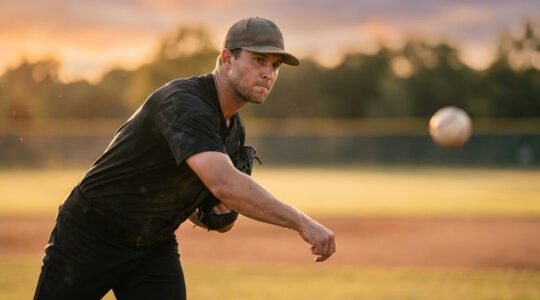
Contrary to popular belief, a bigger bench press won’t make you throw harder; it will just put more stress on your shoulder. True throwing velocity comes from your ability to produce force *quickly* (Rate of Force Development) and transfer it…
Read more
The tendency for competitive athletes to freeze or make poor choices in critical moments isn’t a failure of skill, but a breakdown in cognitive processing. Instead of repeating generic advice to “stay calm,” this guide deconstructs the mental machinery behind…
Read more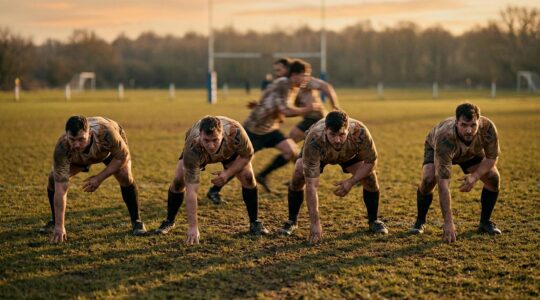
Your defenders’ lack of pace isn’t the problem; your lack of a cohesive, low-effort system is what’s getting you beat. A 5-3-2 formation provides natural cover against wingers and is more forgiving of individual errors than a traditional 4-4-2. Simple,…
Read more