

The key to unlocking elite gut health and performance isn’t just ‘eating clean’; it’s strategically diversifying your plant intake to 30+ a week without breaking your budget.
- Eating the same meals weakens your gut’s microbial diversity, compromising your immune system and recovery capacity.
- A colorful diet ensures broad micronutrient coverage, while a smart mix of fibers optimizes digestion and fuels performance-enhancing bacteria.
Recommendation: Start by swapping one of your staple ingredients (like rice) for a different whole grain (like quinoa or oats) this week and adding one new vegetable to your daily meal.
If you’re a creature of habit, the “chicken and rice” diet probably feels like the pinnacle of efficiency. It’s simple, predictable, and helps you hit your macros. But as a gut health dietitian, I see the hidden cost of this dietary monotony. You might feel strong, but your internal ecosystem—your gut microbiome—is likely starved for variety, which can silently sabotage your long-term health and athletic potential. The common advice to simply “eat more veggies” is too vague. You need a system that works with your routine and budget, not against them.
The goal of eating 30 different plants per week might sound daunting, but it’s one of the most powerful levers you can pull for your health. And “plant” is a broad term: it includes fruits, vegetables, whole grains, legumes, nuts, seeds, herbs, and spices. Each one provides a unique set of fibers and polyphenols that feed different beneficial bacteria in your gut. This diversity is the foundation of a robust immune system, efficient nutrient absorption, and superior recovery. The common belief is that this level of variety is expensive and time-consuming, a luxury reserved for those with endless time for farmers’ markets.
But what if the real secret wasn’t about completely overhauling your life, but about making small, strategic swaps? This guide will reframe the 30-plant challenge from a chore into a performance-enhancing strategy. We will move beyond the platitudes and show you how to turn your gut into a high-performance engine. We’ll explore the science behind why diversity matters, how to use color and fiber strategically, and how to make budget-conscious choices that maximize your nutrient return on investment.
This article provides a complete roadmap to achieving plant diversity on a budget. We’ll cover everything from the science of your microbiome to practical tips on food selection and recovery nutrition.
Summary: A Dietitian’s Guide to Plant Diversity and Performance
- Why Eating the Same Meal Daily Weakens Your Immune System?
- How to Use Color to Ensure Vitamin Coverage Without Pills?
- Soluble vs. Insoluble Fiber: Which Fixes Your Digestion Issues?
- The Exclusion Diet Mistake That Leads to Deficiencies
- When to Buy Berries vs. Root Vegetables for Maximum Nutrient Density?
- Why ‘Eating Clean’ Can Still Lead to Weight Gain?
- Why a Low Heart Rate Variability Score Means You Should Rest?
- How to Eat to Speed Up Recovery from a Muscle Tear?
Why Eating the Same Meal Daily Weakens Your Immune System?
Eating the same meal every day, even if it’s “healthy,” creates a monoculture in your gut. Your gut microbiome is a complex ecosystem of trillions of bacteria, and just like any ecosystem, it thrives on diversity. When you only provide one type of fuel (like chicken and rice), you selectively feed a very narrow range of microbes, while others starve and die off. This reduction in microbial diversity directly weakens your immune defenses and hampers your ability to produce essential compounds for health and performance.
These crucial compounds are known as Short-Chain Fatty Acids (SCFAs), such as butyrate, acetate, and propionate. They are produced when beneficial gut bacteria ferment the different types of fiber you eat. SCFAs are the primary energy source for the cells lining your colon, they help regulate inflammation, and they strengthen your gut barrier, preventing unwanted substances from leaking into your bloodstream. A lack of plant diversity means a lack of fiber diversity, which leads to poor SCFA production. This can manifest as bloating, poor recovery, and increased susceptibility to illness.
For athletes, this is not a trivial matter. Your gut is a veritable microbiome engine for performance. Recent science confirms a direct link between the gut and athletic output. A study on elite athletes found significant correlations between maximal power output and the presence of SCFA-producing bacteria. For instance, power output correlated with SCFA producers like Eubacterium rectale and Blautia wexlerae. When you limit your diet, you limit the fuel for these performance-enhancing microbes, effectively leaving power on the table.
How to Use Color to Ensure Vitamin Coverage Without Pills?
The simplest way to ensure you’re getting a wide array of vitamins, minerals, and antioxidants without relying on a multivitamin is to “eat the rainbow.” The vibrant colors in plants are not just for show; they are visual cues for the presence of powerful phytonutrients. Each color group represents different families of compounds that perform unique roles in your body, from fighting inflammation to supporting cellular energy. A plate full of color is a plate full of nutrient synergy.
Instead of tracking every single micronutrient, focus on getting a variety of colors onto your plate each day. Deep reds and purples (beets, purple cabbage) are rich in anthocyanins, which improve blood flow and can enhance VO2 max. Oranges and yellows (carrots, sweet potatoes) provide carotenoids that help reduce post-workout oxidative stress. Dark greens (spinach, kale) are packed with nitrates and magnesium, crucial for muscle function and energy production. Even white and tan foods like onions, garlic, and mushrooms offer powerful anti-inflammatory and immune-supporting compounds like quercetin and allicin.
This strategy is not only effective but also incredibly budget-friendly. You don’t need expensive superfoods. Common, affordable produce like carrots, cabbage, onions, and frozen berries can provide this full spectrum of benefits. The key is variety and consistency.
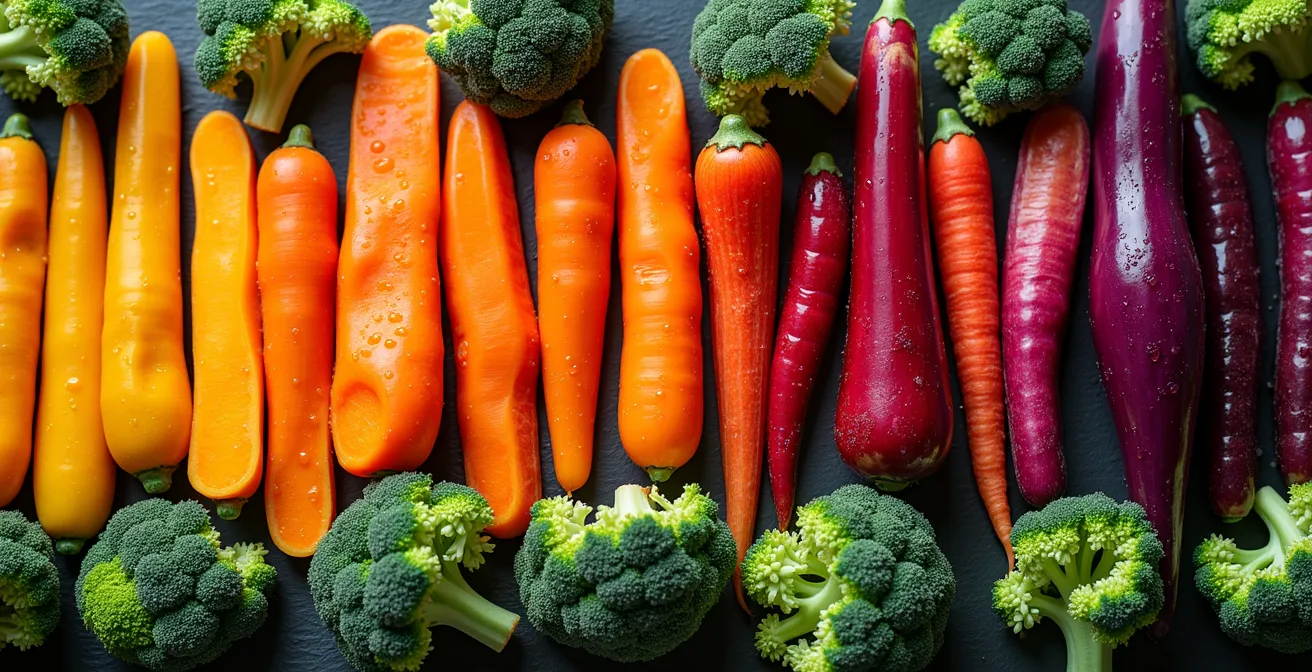
As you can see, a diverse palette of plants creates a powerful health-promoting mosaic. This visual approach to nutrition removes the complexity of tracking individual vitamins and instead focuses on a simple, holistic principle that naturally leads to a more nutrient-dense diet. The following table breaks down the performance benefits of each color group and provides budget-friendly examples.
This approach transforms meal planning into a creative and intuitive process, as highlighted in this breakdown of plant color benefits for performance.
| Color Group | Key Compounds | Performance Benefits | Budget-Friendly Sources |
|---|---|---|---|
| Deep Reds/Purples | Anthocyanins | Improved blood flow, VO2 max enhancement | Beets, purple cabbage, frozen berries |
| Orange/Yellow | Carotenoids | Post-workout oxidative stress reduction | Sweet potatoes, carrots, yellow peppers |
| Dark Greens | Nitrates, Magnesium | Cellular energy efficiency, muscle function | Spinach, kale, broccoli |
| White/Tan | Quercetin, Allicin | Anti-inflammatory, immune support | Onions, garlic, mushrooms |
Soluble vs. Insoluble Fiber: Which Fixes Your Digestion Issues?
The key to fixing most common digestion issues lies not in choosing one type of fiber over the other, but in consuming a balanced mix of both soluble and insoluble fiber. These two types play different, yet complementary, roles in your digestive tract. Thinking of them as a team is the best approach: one manages flow and feeds your gut bacteria, while the other provides bulk and ensures regularity.
Soluble fiber dissolves in water to form a gel-like substance in your digestive tract. This gel slows down digestion, which helps with blood sugar control and makes you feel fuller for longer. More importantly, it is the primary food source for your beneficial gut bacteria, which ferment it to produce those critical SCFAs. Sources of soluble fiber include oats, barley, apples, carrots, citrus fruits, and legumes like beans and lentils.
Insoluble fiber, on the other hand, does not dissolve in water. It acts like a “bulking agent,” adding weight to your stool and helping it pass more quickly through your intestines. This is essential for preventing constipation and maintaining regularity. You can find insoluble fiber in whole grains, nuts, seeds, and the skins of many fruits and vegetables like potatoes and apples.
For someone used to a low-fiber diet, a sudden increase can cause gas and bloating. The solution is to gradually increase your intake of both types and ensure you are drinking plenty of water. A strategic combination, often called “fiber stacking,” ensures your digestive system runs smoothly while your microbiome is well-fed and productive.
Your Action Plan: Budget-Friendly Fiber Stacking Meal Ideas
- Breakfast: Oatmeal (soluble) topped with ground flax (both types), chopped apple (soluble), and walnuts (insoluble).
- Lunch: Lentil soup (soluble) with quinoa (both), shredded cabbage (insoluble), and pumpkin seeds (insoluble).
- Dinner: Black bean (soluble) and brown rice (insoluble) bowl with mixed vegetables.
- Snack: Chia pudding (soluble) with berries (both) and sunflower seeds (insoluble).
- Pre-workout: Banana (soluble) with almond butter (insoluble) for easy digestion.
The Exclusion Diet Mistake That Leads to Deficiencies
In the quest for “clean eating,” one of the most common mistakes is the unnecessary exclusion of entire food groups. Whether it’s cutting out all grains, legumes, or nightshades based on a popular trend, this restrictive approach can be a fast track to nutrient deficiencies and a depleted microbiome. Unless you have a diagnosed allergy, intolerance, or medical condition like Celiac disease, these exclusion diets often do more harm than good by drastically reducing the diversity of fibers and phytonutrients available to your gut.
Each plant family offers a unique profile of nutrients. Legumes are a powerhouse of fiber, plant-based protein, and minerals like iron and folate. Whole grains provide B vitamins and different types of fiber than vegetables. By eliminating these groups, you create nutritional gaps that are difficult to fill. More importantly, you starve the specific gut microbes that specialize in fermenting the fibers from those foods. This can lead to a less resilient and less functional gut ecosystem, potentially impacting everything from your mood to your immune response.
As gut health expert Dr. Megan Rossi states, the power is in our hands to cultivate a healthy internal garden.
We can control the health of our gut microbiome, and the key predictor of that is diversifying your plants.
– Dr. Megan Rossi, Fortune Well – How To Eat More Plants
This diversity is paramount for athletes. Research shows that physical activity interventions promote the growth of beneficial bacteria. One study found that active individuals showed increased SCFA-producing bacteria such as Akkermansia, Faecalibacterium, and Roseburia. By consuming a wide variety of plants, you provide the necessary fuel to support and enhance this positive adaptation, turning your gut into a recovery and performance powerhouse.
When to Buy Berries vs. Root Vegetables for Maximum Nutrient Density?
For budget-conscious individuals, the choice between different types of produce often comes down to price and shelf life. A strategic approach involves assessing the “Performance ROI” (Return on Investment) of your food choices. Both berries and root vegetables are nutritional powerhouses, but they excel in different scenarios. Knowing when to prioritize each can help you maximize nutrient density while managing your grocery bill.
Root vegetables—like sweet potatoes, carrots, and beets—are the undisputed champions of budget-friendly fuel. They are inexpensive, have a long shelf life, and are rich in complex carbohydrates that provide sustained energy, making them ideal for pre-workout meals or daily fuel. While they contain valuable vitamins and minerals, their concentration of antioxidant polyphenols is generally lower than that of berries.
Berries, on the other hand, are the specialists in recovery. They are packed with polyphenols, particularly anthocyanins, which are potent antioxidants that help combat exercise-induced inflammation and oxidative stress. Fresh berries can be expensive and perishable, but this is where frozen berries become a game-changer. They are picked at peak ripeness and flash-frozen, locking in their nutrient content. They are significantly cheaper than fresh, last for months, and are perfect for post-workout smoothies.
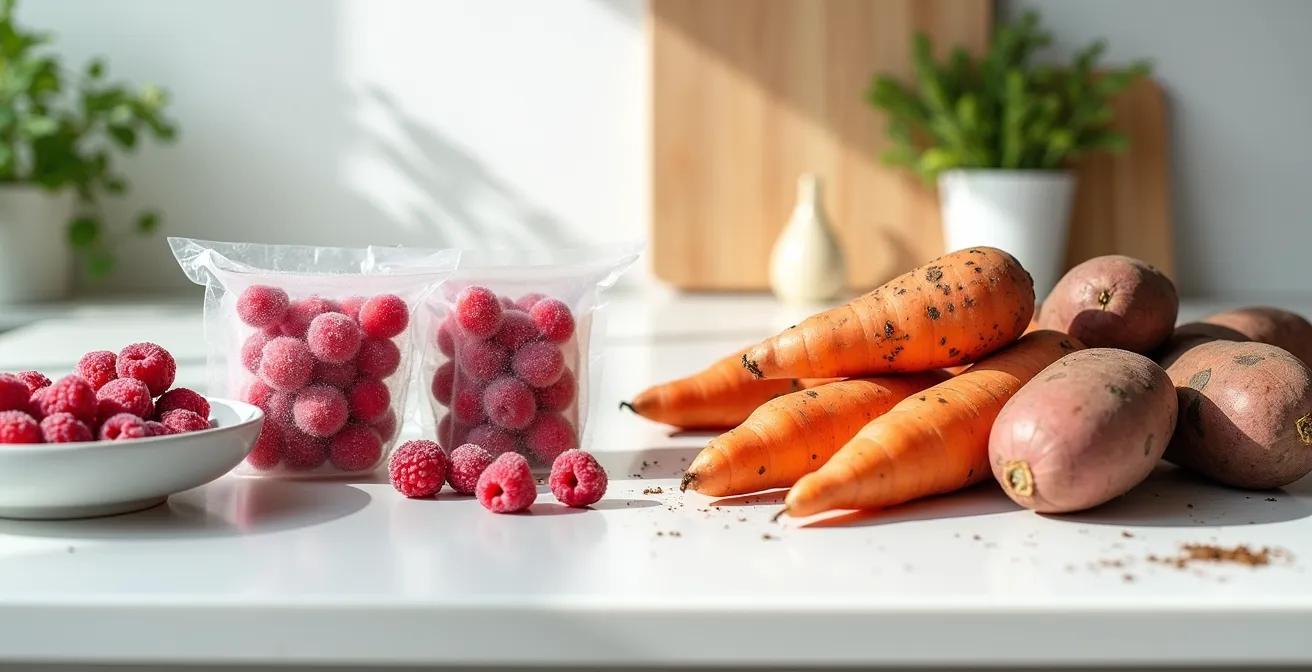
The optimal strategy is not to choose one over the other, but to use them both strategically. Use root vegetables as your affordable, everyday energy source, and leverage the cost-effective power of frozen berries for targeted recovery support. This approach, detailed in this comparative nutritional analysis, ensures you get the best of both worlds.
| Factor | Berries | Root Vegetables | Best Use Case |
|---|---|---|---|
| Cost per serving | $2-4 (fresh), $1-2 (frozen) | $0.50-1.50 | Root veg for daily fuel |
| Polyphenols/100g | 200-500mg | 50-150mg | Berries for recovery |
| Shelf life | 3-5 days fresh, 6+ months frozen | 2-4 weeks | Root veg for meal prep |
| Glycemic Load | Low (4-6) | Medium (10-15) | Berries post-workout, roots pre-workout |
Why ‘Eating Clean’ Can Still Lead to Weight Gain?
The term “eating clean” can be misleading because it focuses solely on food quality while ignoring food quantity and caloric density. You can absolutely gain weight on a diet of perfectly “clean” foods if you are consuming more calories than your body expends. This is a common trap for those who add nutrient-dense but calorie-heavy foods to their diet without adjusting portion sizes.
Many celebrated health foods are incredibly calorie-dense. Think of nuts, seeds, avocados, and olive oil. While they are packed with healthy fats, vitamins, and minerals, their calorie count is significant. For example, a nutritional analysis shows that nuts can contain 550-650 calories per 100g, which is more than five times the amount found in most vegetables. A handful of almonds or a tablespoon of olive oil can add up quickly, and without mindful portion control, these “healthy” additions can push you into a calorie surplus.
This is where the concept of nutrient density vs. caloric density becomes crucial. Most vegetables are high in nutrient density but low in caloric density, meaning you can eat a large volume without a major calorie hit. Foods like nuts and oils are high in both. The goal is not to avoid these foods—they are incredibly beneficial—but to be aware of their caloric contribution. A successful eating strategy balances both types of foods.
Furthermore, achieving the 30-plant-a-week goal can actually help regulate appetite and prevent overeating. The high fiber and water content from a diverse range of vegetables, fruits, and legumes promotes satiety, making you feel fuller on fewer calories. This helps you naturally manage your total energy intake while flooding your body with the micronutrients it needs to thrive. It’s about building a diet that’s both nourishing and satiating.
Why a Low Heart Rate Variability Score Means You Should Rest?
A low Heart Rate Variability (HRV) score is a direct signal from your autonomic nervous system that your body is under stress and has not fully recovered. HRV measures the variation in time between each heartbeat. A high HRV indicates a well-rested, resilient system ready to perform, dominated by the “rest-and-digest” parasympathetic nervous system. A low HRV signifies a state of stress or fatigue, where the “fight-or-flight” sympathetic nervous system is in control. Training hard on a low HRV day can lead to overtraining, injury, and illness.
Interestingly, your gut health plays a significant role in your recovery and, by extension, your HRV. An inflamed or imbalanced gut can be a major source of systemic stress, contributing to a suppressed HRV. The Short-Chain Fatty Acids (SCFAs) produced by your gut microbiome have powerful anti-inflammatory effects and are critical for nervous system health. By eating a diverse, fiber-rich diet, you are directly fueling the production of these compounds that help your body manage stress and recover more effectively.
This creates a powerful feedback loop: a healthy gut promotes better recovery and a higher HRV, while a higher HRV indicates you are ready to train hard, which in turn can further improve your gut health.
SCFAs have been recently defined as ‘biotics’ that could be used as an exogenous microbiome modulation approach for improving health and athletic performance. A recent study discovered a gut–brain connection in mice that enhances athletic performance by increasing dopamine signaling during PA.
– Penney et al., Physical Activity, Sedentary Behavior and Microbiome Study 2024
Therefore, when your wearable device shows a low HRV, it’s not just a suggestion to rest—it’s a biological imperative. It’s also a cue to double down on recovery-promoting behaviors, including prioritizing sleep and consuming a colorful, fiber-rich, plant-diverse diet to support your microbiome engine and help your nervous system bounce back stronger.
Key Takeaways
- Dietary diversity is not a luxury; it’s a performance necessity that fuels the beneficial bacteria responsible for immunity and recovery.
- Focus on eating a “rainbow” of colors and a mix of both soluble and insoluble fibers to cover your micronutrient needs and optimize digestion.
- “Clean eating” does not guarantee weight control; be mindful of caloric density in healthy foods like nuts and oils, and leverage high-fiber plants for satiety.
How to Eat to Speed Up Recovery from a Muscle Tear?
To speed up recovery from a muscle tear, your nutrition strategy must shift from general health to targeted repair. This involves providing your body with the specific building blocks and anti-inflammatory compounds it needs to manage inflammation, rebuild tissue, and restore function. A plant-diverse diet is exceptionally well-suited for this, offering a symphony of nutrients that work together to accelerate the healing process.
In the initial phase (the first 1-3 days) post-injury, the focus should be on controlling inflammation. This is where foods rich in omega-3 fatty acids (flaxseeds, chia seeds, walnuts) and anti-inflammatory compounds like quercetin (onions, apples) are crucial. Gentle, easily digestible foods like onion-based soups and seed puddings can provide these nutrients without stressing your system.
As the acute inflammation subsides (days 4-10), the focus shifts to tissue regeneration. This phase requires an abundance of Vitamin C to synthesize collagen, the primary protein in connective tissue. Bell peppers, kiwis, and broccoli are excellent sources. You also need nitrates to improve blood flow to the injured area, which can be found in dark leafy greens like arugula and beets. A beet and arugula salad or a kiwi smoothie can be powerful recovery tools.
Finally, in the longer-term remodeling phase (week 2 and beyond), you need sustained protein and a wide array of micronutrients to rebuild strong, resilient tissue. This is where a diverse diet truly shines. Lentil soups with multiple vegetables, tofu scrambles with turmeric (a potent anti-inflammatory), and bean chilis with diverse spices provide a steady stream of amino acids and phytonutrients. SCFA-producers like butyrate have been shown to induce beneficial alterations in skeletal tissues, directly aiding in the rebuilding process. Your goal is to provide the broadest possible range of plant-based materials to support this complex construction project.
Begin today by incorporating just one new plant into your daily routine. This small step is the start of a powerful transformation that will not only diversify your plate but also upgrade your health, performance, and resilience from the inside out.
Frequently Asked Questions About the 30-Plant-a-Week Diet
Can I eat unlimited amounts of healthy foods without gaining weight?
No, even nutrient-dense foods like nuts, avocados, and olive oil are calorie-dense and can lead to weight gain if consumed in excess.
Does ‘clean eating’ guarantee weight loss?
Not necessarily. Weight management depends on total caloric balance, not just food quality. You can gain weight eating clean foods if you consume more calories than you burn.
How does plant variety affect metabolism?
Eating 30+ different plants weekly can prevent metabolic adaptation by providing diverse nutrients and fibers that support varied gut bacteria, potentially maintaining a more flexible metabolism.