
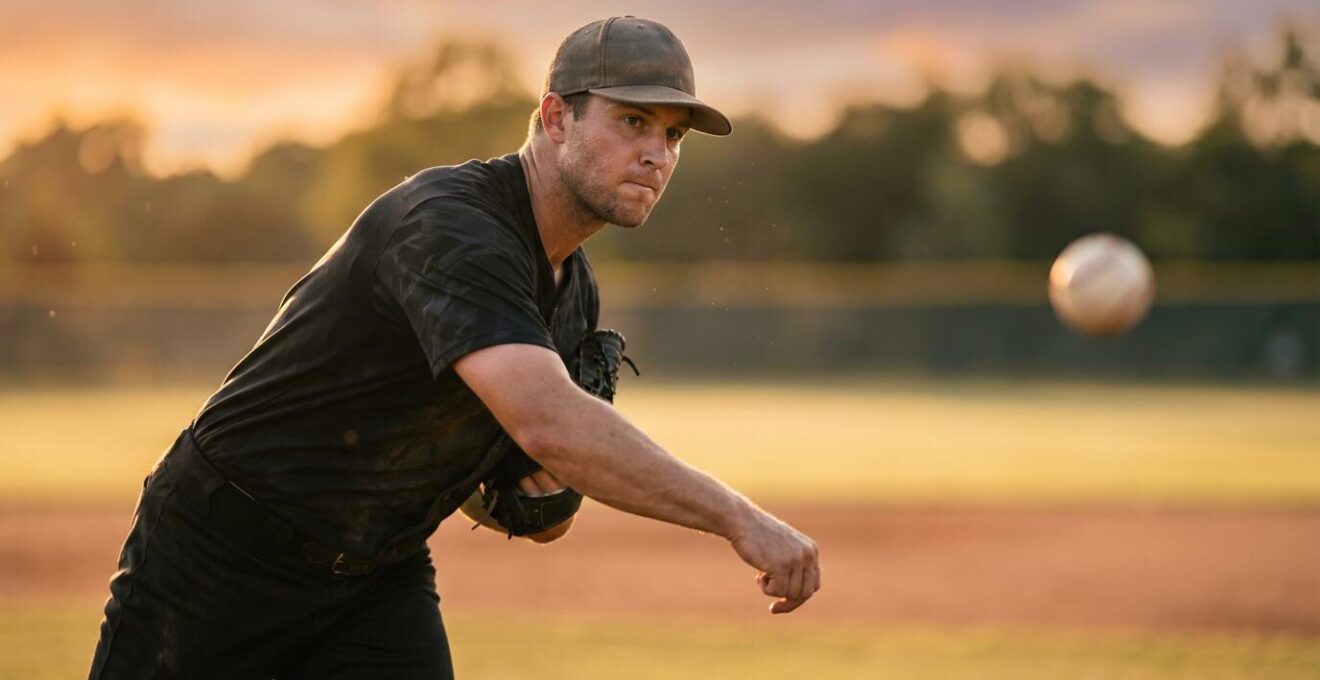
Contrary to popular belief, a bigger bench press won’t make you throw harder; it will just put more stress on your shoulder.
- True throwing velocity comes from your ability to produce force *quickly* (Rate of Force Development) and transfer it through an efficient kinetic chain.
- Your rotator cuff’s primary job is not to generate power, but to act as a high-performance braking system to decelerate your arm safely.
Recommendation: Shift your training focus from building maximal strength to mastering force conversion with explosive, full-body movements that protect your joints.
Every competitive handball player hits that wall. You’re strong, you’re fit, but your throwing velocity has plateaued. The temptation is to head back to the gym and push more weight, convinced that a bigger bench press or a heavier overhead press is the answer. You follow the common advice, doing endless sets of band rotations, hoping to “strengthen” your rotator cuff into submission. But deep down, you’re worried about that sharp pain, that dreaded “pop” that could end your season.
Here’s the hard truth from a strength coach: you’re looking in the wrong place. The obsession with raw strength and isolating the shoulder is not just ineffective; it’s dangerous. It treats your body like a collection of parts rather than a single, integrated system. The real key to unlocking explosive, sustainable power lies not in building a bigger engine, but in perfecting the transmission. It’s about mastering the art of force conversion.
But what if the secret wasn’t about adding more force, but about eliminating the points where you lose it? This guide will break that down. We’re going to rebuild your understanding of power from the ground up. We will analyze the entire kinetic chain, from how your feet interact with the court to the critical role of your core and thoracic spine. You’ll learn why being strong doesn’t automatically make you powerful and, most importantly, how to convert your hard-earned gym strength into devastating on-court velocity—all while bulletproofing your shoulder for the long haul. This is about training smarter, not just harder.
To build a resilient shoulder, you need to master the fundamentals of stability and control. The following video from renowned strength coach Eric Cressey demonstrates a foundational exercise for improving external and internal rotation control, which is a non-negotiable for any serious throwing athlete’s long-term health.
This article provides a complete framework for developing safe, explosive power. We’ll explore each link in the kinetic chain, identify common training errors, and provide a clear roadmap for converting your strength into athletic performance. The following sections will guide you through this process step-by-step.
Summary: The Athlete’s Guide to Velocity and Joint Integrity
- Why Poor Landing Mechanics Cause 70% of Handball Knee Injuries?
- How to Manage Resin Buildup for Consistent Ball Control?
- Stability or Speed: Which Shoe Feature Matters More for Wingers?
- The Training Error That Leads to Chronic Elbow Tendinitis
- When to Jump: Timing Your Block Against a Feinting Attacker
- Why Being Strong Doesn’t Automatically Make You Punch Harder?
- How to Design a Gym Routine for Your ‘Weak’ Arm?
- How to Convert Gym Strength into Athletic Power for Contact Sports?
Why Poor Landing Mechanics Cause 70% of Handball Knee Injuries?
We start from the ground up. Before you can even think about throwing power, you have to address how you interact with the floor. Many athletes dismiss landing mechanics as just a “knee problem,” but it’s a critical power leak in your kinetic chain. When you land from a jump shot with poor alignment—knees caving inward, hips unstable—your body fails to absorb and redirect force efficiently. This not only puts massive stress on your knee ligaments but also forces your upper body to overcompensate to generate power, placing your shoulder and elbow at risk.
The scale of this issue is significant. Recent research from the Turkish Handball Super League demonstrates that imbalanced landing mechanics are a primary factor in joint stress, with knee injuries accounting for 15.1% of all handball injuries. The study of 160 elite players found that athletes with inadequate plyometric training lacked the neuromuscular control to stabilize their joints upon impact. This creates a “wobble” effect that travels up the body.
Think of it this way: trying to throw a cannon from a canoe. If your base isn’t solid, all the upper body strength in the world won’t translate into velocity. A stable landing is the platform upon which all explosive upper body movement is built. Neglecting it means you’re not only increasing your risk of a lower-body injury but also actively sabotaging your throwing potential by creating mechanical leakage before the throw has even begun.
How to Manage Resin Buildup for Consistent Ball Control?
Once your base is stable, the next point of contact is your hand on the ball. While it may seem like a minor detail, inconsistent grip is another significant power leak. If your grip is compromised by poorly managed resin—either too much, too little, or old and slick—your brain receives feedback that the connection is unstable. Your body’s natural response is to tighten up and “muscle” the ball, using brute arm strength instead of a fluid, whip-like motion. This kills velocity and puts immense strain on your elbow and shoulder.
Effective resin management is not about caking it on; it’s about creating a consistent, reliable surface that allows you to transfer force from your fingertips to the ball with maximum efficiency. Proper application and maintenance ensure that your grip is the same on the first throw as it is on the last, allowing you to focus on mechanics, not on fighting the ball. A consistent grip fosters confidence and a relaxed arm, which are prerequisites for peak velocity.
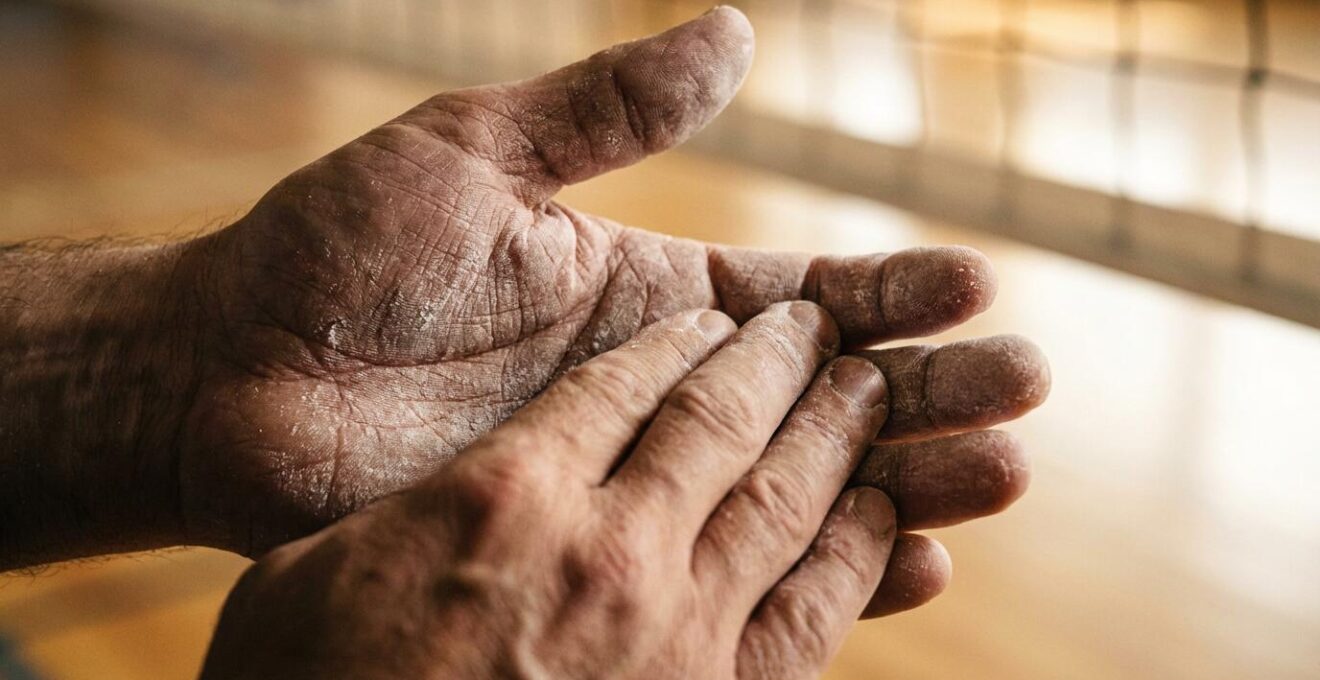
To achieve this consistency, you need a systematic protocol. This isn’t just about what you do before the game, but how you manage it during play and what you do afterward to maintain skin health and prevent negative buildup. Follow these steps for optimal control:
- Pre-game: Apply a thin, even layer of resin 30 minutes before warm-up to allow it to set properly.
- In-game: Monitor grip quality every 10-15 minutes. Reapply minimal amounts only when grip degrades below your optimal feel.
- Half-time: Clean hands with a specialized resin remover, then reapply a fresh, thin layer.
- Post-game: Ensure complete removal using warm water and a specialized cleanser to prevent residue buildup and skin irritation.
- Weekly maintenance: Deep clean your hands and inspect for any skin irritation or excessive callus formation.
Stability or Speed: Which Shoe Feature Matters More for Wingers?
Continuing up the kinetic chain, your footwear is the interface between your body and the court. For a dynamic position like a winger, the debate between stability and speed is constant. Do you opt for a lightweight shoe for linear sprints or a robust, stable shoe for aggressive lateral cuts and landings? The answer, as with most things in high-performance sport, is nuanced. Focusing on one attribute at the expense of the other creates a weak link in your movement chain.
A shoe built only for speed may lack the lateral support needed for a hard plant and cut, causing your foot to slide within the shoe and dissipating the force you need for a quick change of direction. Conversely, a shoe built only for stability might be too heavy and rigid, slowing you down in open-court situations. The ideal shoe for a winger isn’t about choosing one feature over the other; it’s about finding the optimal balance for the multi-directional demands of the position.
This matrix breaks down how different features perform across key handball movements, helping you understand the trade-offs.
| Movement Type | Stability Features | Speed Features | Optimal Balance |
|---|---|---|---|
| Linear Sprint | Less critical | Essential (lightweight, responsive cushioning) | 70% speed, 30% stability |
| Lateral Cuts | Critical (wide base, lateral outriggers) | Important (flexible forefoot) | 60% stability, 40% speed |
| Jump-Shot Landing | Essential (heel counter, midfoot support) | Secondary | 80% stability, 20% speed |
| Quick Direction Changes | Important (torsional rigidity) | Important (low profile) | 50% stability, 50% speed |
Ultimately, the choice depends on your specific playing style and physical needs. As Dr. Marcus Weber notes in the International Journal of Sports Biomechanics, a more sophisticated approach is required.
Directional-specific performance is the real answer – wingers need shoes that adapt to multiple movement patterns rather than optimizing for a single attribute.
– Dr. Marcus Weber, International Journal of Sports Biomechanics
The Training Error That Leads to Chronic Elbow Tendinitis
If your lower body is stable and your connection to the court and ball are secure, but you still have arm pain, we need to look higher up the chain. Chronic elbow tendinitis, or “thrower’s elbow,” is rarely just an elbow problem. It’s a symptom of dysfunction elsewhere, and the number one training error that leads to it is neglecting the health and function of your shoulder, specifically the rotator cuff and thoracic spine.
Many athletes mistakenly think of the rotator cuff as a power generator. It’s not. It’s a sophisticated braking and steering system. Its primary job during a high-velocity throw is to eccentrically contract to slow the arm down safely after ball release. When the rotator cuff is weak, other muscles around the elbow and shoulder have to pick up the slack, leading to overuse and inflammation. A 2015 study on baseball players confirmed this, showing that pitchers with arm injuries had significantly weaker rotator cuffs than their healthy counterparts. Weakness in these crucial decelerators is a direct predictor of injury.
The second major culprit is poor thoracic spine (mid-back) mobility. A powerful throw requires significant rotation through the torso. If your T-spine is stiff, that rotation has to come from somewhere else—either the lower back (a recipe for disc issues) or the shoulder joint itself. This forces the shoulder into excessive, unhealthy ranges of motion, putting massive stress on the rotator cuff and elbow. Training T-spine mobility isn’t a “flexibility” extra; it’s a core component of building a safe and powerful throw.

When to Jump: Timing Your Block Against a Feinting Attacker
While developing your own offensive power is crucial, understanding movement from a defensive perspective makes you a more complete athlete. The ability to read an opponent and react with perfect timing is a skill that separates good players from great ones. When facing a feinting attacker, the most common mistake defenders make is “biting” on the fake—jumping too early by reacting to the ball or the shoulders instead of the attacker’s true center of mass.
Elite defenders don’t watch the ball; they watch the hips. An attacker can fake with their eyes, shoulders, and the ball, but they cannot fake their center of gravity. The hips are the truest indicator of an attacker’s intention. A drop in hip height and a definitive rotation are the real cues that a jump or a committed move is about to happen. Responding to these signals, rather than the “noise” from the upper body, allows you to stay grounded, patient, and react to the actual attack, not the feint.
Training this patience and visual discipline requires specific drills that force you to ignore distractions and focus only on the critical cues. This skill is not just for defense; it enhances your overall athletic intelligence and reaction time, which are key components of high-level performance in any situation on the court.
Action Plan: The Hip-Reading Decision Framework for Defenders
- Athletic Stance: Maintain an athletic stance with your weight centered and knees slightly bent at 30-40 degrees. This keeps you ready to move in any direction.
- Visual Focus: Discipline your eyes to focus exclusively on the attacker’s hip position. Consciously ignore the ball, eyes, and shoulders.
- Read Rotation: Wait for the attacker’s hips to rotate beyond 45 degrees. This is the point of no return and indicates a commitment to a specific direction.
- React to the Drop: Initiate your jump or defensive slide only when the attacker’s hips drop below their neutral stance position. This is the true signal of jump preparation.
- Practice Patience Drills: Incorporate drills using visual or auditory cues to shorten your reaction loop, training yourself to wait for the hip-drop signal before moving.
Why Being Strong Doesn’t Automatically Make You Punch Harder?
This is the most misunderstood concept in athletic performance, and it’s at the heart of why so many players get injured chasing velocity. Being strong in the gym—lifting a heavy weight slowly—and being powerful on the court are two different physical qualities. The missing ingredient is Rate of Force Development (RFD), which is a measure of explosive strength. RFD is about how *fast* you can generate force, not just how much force you can generate.
Consider this: as Dr. G. Gregory Haff explains, it can take 600-800 milliseconds to produce maximal force in a lift like a squat. However, most athletic movements, like a throw or a jump, happen in less than 250 milliseconds. Your ability to lift a huge weight over half a second is almost irrelevant in a movement that’s over in a quarter of a second. What matters is how much force you can summon in that tiny window of time. That is RFD.
Research on explosive strength demonstrates that power-trained athletes, like sprinters and jumpers, have a significantly greater RFD than athletes who only train for maximal strength. This is why an Olympic weightlifter, who is trained to move moderate weights at incredible speeds, is often far more explosive than a powerlifter who can lift much heavier weights but does so more slowly. Their nervous systems are trained for speed.
Focusing your training solely on increasing your 1-rep max is training the wrong quality. To increase throwing velocity, you must shift your focus to improving your RFD. This means incorporating exercises like plyometrics, medicine ball throws, and Olympic lifts—movements that train your nervous system to fire faster and your muscles to contract more forcefully in the shortest possible time. Strength is the foundation, but RFD is what builds the skyscraper of athletic power on top of it.
How to Design a Gym Routine for Your ‘Weak’ Arm?
In a unilateral sport like handball, it’s natural to develop one side of your body more than the other. Your throwing arm and the opposite leg often become stronger and more coordinated. While this specialization seems efficient, it creates muscular imbalances that are a ticking time bomb for injury and a hidden brake on your performance. A significant strength discrepancy between your dominant and non-dominant sides disrupts the kinetic chain’s symmetry.
Think of your core and torso as the transmission for your throwing arm. If the non-dominant side is weak, it can’t provide a stable platform for the dominant side to rotate against. This forces the throwing shoulder to generate more power on its own, increasing strain and reducing efficiency. Furthermore, this imbalance can lead to compensatory movement patterns that travel all the way down to your hips and knees. Building up your “weak” arm isn’t about becoming ambidextrous; it’s about creating structural integrity and a stable base for your powerful side to operate from.
A specialized routine for your non-dominant side should focus on unilateral (single-arm) exercises and anti-rotation core work. The goal is to bring the weaker side up to at least 90% of the strength of the dominant side. This creates a more balanced and resilient frame, allowing for more efficient force transfer and reducing the likelihood of compensatory injuries.
- Prioritize Unilateral Pulling: Start with single-arm dumbbell rows. Aim for 3 sets of 12-15 reps on each arm, but add an extra set on your weaker side to increase its training volume.
- Implement Farmer’s Walks: Perform 3 sets of 40-yard farmer’s walks, focusing intensely on maintaining grip and shoulder stability on the non-dominant side.
- Add Anti-Rotation Core Work: Pallof presses are excellent for this. Do 3 sets of 10 reps on each side, emphasizing your ability to resist rotation when the force is pulling from your weak side.
- Program Eccentric Emphasis: On all exercises for your non-dominant arm, use a slow, 3-second lowering phase. This builds muscle control and tendon strength.
- Include Contralateral Training: As a rule of thumb, perform an extra 20% of the volume (reps or sets) on your non-dominant side for all unilateral exercises.
Key Takeaways
- Velocity is about Rate of Force Development (RFD), not maximal strength. Train for speed of contraction.
- Your rotator cuff is a braking system, not an engine. Protect it by fixing mechanics in your hips and thoracic spine.
- Power is a full-body event. Train the entire kinetic chain, from your feet to your fingertips, to eliminate “power leaks”.
How to Convert Gym Strength into Athletic Power for Contact Sports?
You’ve built your foundation. You understand the science of RFD and the importance of structural balance. Now comes the final, most important step: converting your raw gym strength into usable, on-court athletic power. This is where most athletes fail. They can squat and bench press impressive numbers, but that strength stays locked in the weight room. The key to making the transfer is to train movements, not just muscles, across all three planes of motion.
Your body moves in three dimensions: the sagittal plane (forward and backward, like sprinting), the frontal plane (side-to-side, like shuffling), and the transverse plane (rotational, like throwing). Traditional gym exercises are often sagittal-dominant. To become a powerful athlete, you must pair your foundational strength exercises with power conversion exercises that challenge your body to produce force quickly in all three planes.
This matrix provides a simple framework for programming this conversion. For each foundational strength lift, there is a corresponding power exercise that teaches your body to apply that strength with speed and coordination in a sport-specific context.
| Movement Plane | Traditional Strength Exercise | Power Conversion Exercise | Sport-Specific Application |
|---|---|---|---|
| Sagittal (Forward/Back) | Back Squat | Box Jumps, Broad Jumps | Acceleration, Tackling |
| Frontal (Side-to-Side) | Lateral Lunges | Lateral Bounds, Skater Hops | Cutting, Dodging |
| Transverse (Rotational) | Pallof Press | Medicine Ball Rotational Throws | Throwing, Grappling |
| Combined/Chaotic | Turkish Get-Up | Water-Bag Slams, Partner Drills | Contact Situations |
By structuring your training this way, you teach your nervous system to bridge the gap between the weight room and the court. You’re not just getting strong; you’re building a body that knows how to use that strength to dominate in a dynamic, chaotic sporting environment. This is the final piece of the puzzle for unlocking your true athletic potential.
Start implementing this training philosophy today. Move beyond simply lifting weights and begin training to convert your strength into explosive, game-changing power. Your performance, and your joints, will thank you.