
Alternative sports represent a fundamental shift in how we approach physical activity. Unlike traditional team sports with rigid rules and competitive frameworks, disciplines like skateboarding, parkour, slacklining, and urban skating emphasize personal progression, creative expression, and intrinsic motivation. These movement practices offer something conventional fitness routines often miss: the chance to rediscover playful engagement with your body and environment while building practical skills that extend far beyond the practice session.
The growing interest in leisure-oriented alternative sports reflects a deeper cultural recognition that movement shouldn’t feel like obligation. Whether you’re seeking relief from desk-bound routines, exploring new ways to challenge your coordination, or simply looking for activities that don’t require team schedules and league commitments, alternative sports provide accessible entry points. This article examines the foundational concepts behind these disciplines—from the neurological benefits of balance training to the strategic considerations for safe urban movement—equipping you with the knowledge to engage confidently with practices that prioritize enjoyment and personal development over external validation.
The concept of active leisure has emerged as a counterbalance to the professional burnout epidemic affecting knowledge workers and sedentary professions. Unlike passive recovery methods—scrolling social media, binge-watching series—active leisure engages both body and mind in ways that genuinely restore cognitive resources. Research consistently demonstrates that moderate physical activity triggers neurochemical responses that reduce cortisol levels and enhance mood regulation, creating a genuine buffer against chronic workplace stress.
The key distinction lies in choosing activities that feel restorative rather than depleting. Many people fall into the trap of competitive leisure, transforming what should be recuperative movement into another performance arena complete with metrics, comparisons, and self-imposed pressure. A weekend basketball league might provide exercise, but if it replicates the stress dynamics of your professional life—constant evaluation, hierarchy, winning and losing—it undermines the recovery process. Alternative sports naturally sidestep this trap because progression is inherently personal: your relationship with a skateboard or balance beam isn’t mediated by defeating opponents.
Implementing micro-activities throughout your daily schedule proves more sustainable than rigid workout blocks for most people. Consider these practical integration strategies:
Timing matters significantly for sleep quality outcomes. Engaging in moderate-intensity movement during late afternoon or early evening—roughly four to six hours before bedtime—optimizes the natural decline in core body temperature that facilitates sleep onset. Activities requiring focused attention and coordination, like learning new skateboard tricks or practicing parkour vaults, provide sufficient cognitive engagement to clear mental clutter without the overstimulation that high-intensity interval training might create when poorly timed.
Nearly every alternative sport depends on refined proprioception—your body’s ability to sense its position and movement in space without relying exclusively on visual input. This internal awareness system operates through mechanoreceptors in muscles, tendons, and joints, constantly feeding your brain spatial information that enables coordinated movement. Developing this system transforms not just your athletic capacity but your everyday movement quality and injury resilience.
Static balance—standing on one foot—represents only the beginning. Dynamic balance involves maintaining control while your center of mass moves through space, which describes virtually all real-world movement scenarios. When you navigate uneven terrain, catch yourself from stumbling, or execute a skateboard turn, you’re making continuous micro-adjustments that keep your center of gravity aligned over your base of support. These adjustments happen largely below conscious awareness, which is why training them requires deliberate practice that gradually removes visual dependency and introduces progressive instability.
Your ankle complex functions as the primary interface between your body and the ground, containing numerous proprioceptive sensors that detect surface angles and initiate stabilizing responses. Building ankle stability doesn’t mean rigid strength—it requires developing responsive adaptability. Think of your ankle like a sophisticated suspension system: too stiff and it can’t absorb irregularities; too loose and it provides no support. Practices like slacklining or skateboarding naturally train this responsive quality through constant terrain variation and weight shift demands.
Balance tools range from simple to complex, each offering distinct training stimuli:
The critical progression involves gradually reducing visual input—initially practicing with full vision, then soft focus, eventually with eyes closed for brief intervals. This forces your nervous system to prioritize proprioceptive and vestibular information, building genuine internal awareness rather than visual compensation patterns that fail when attention divides or lighting changes.
Skateboarding, inline skating, and longboarding transform urban environments into movement playgrounds while providing practical transportation alternatives. These disciplines develop a unique skillset combining precise motor control, environmental scanning, and risk assessment—capabilities that transfer remarkably well to other physical domains and even cognitive tasks requiring spatial reasoning.
Mastering the foot brake remains the foundational safety skill for any wheeled sport. Unlike bike brakes that operate through hand controls, foot braking requires you to maintain balance on your front foot while extending your rear foot to create friction with the ground. This seemingly simple action demands significant proprioceptive control and hip stability. Begin practicing on flat, smooth surfaces at walking pace, progressively increasing speed only after the movement pattern becomes automatic. The ability to execute a controlled foot brake while scanning ahead for hazards represents the minimum competency threshold for safe urban skating.
Wheel durometer—the hardness rating measured on the A-scale—dramatically affects your riding experience and safety. Softer wheels (78A-87A) provide better grip and vibration dampening on rough pavement but roll slower. Harder wheels (88A-101A+) offer speed and responsiveness on smooth surfaces but transmit every pebble directly to your feet and can slide unpredictably on wet or dusty pavement. Most urban riders benefit from the 83A-87A range, offering reasonable speed with enough grip for varied conditions.
Developing surface-reading skills prevents the majority of skating injuries. Learn to identify these common hazards from distance:
Strategic route selection distinguishes experienced urban skaters from beginners. Optimal routes prioritize smooth pavement, manageable grades, minimal vehicle conflict points, and escape options when speed builds unexpectedly. Many cities now feature bike lane networks that provide safer skating corridors, though you must remain vigilant about pedestrian intersections and opening car doors. Preventing road rash begins with realistic assessment of your braking ability relative to route demands—if a hill’s grade exceeds your comfortable braking capacity, walk it or choose an alternative path. Quality protective gear (helmet, wrist guards, knee and elbow pads) should be non-negotiable during skill acquisition phases.
Parkour reimagines built environments as movement puzzles, training practitioners to navigate obstacles fluidly through running, jumping, climbing, and vaulting techniques. Beyond the physical spectacle lies a profound practice of spatial problem-solving and adaptive thinking that reshapes how you perceive and interact with everyday spaces.
The flow state—that feeling of effortless concentration where action and awareness merge—occurs reliably in parkour practice when challenge level matches skill development. Too easy and boredom disrupts engagement; too difficult and anxiety blocks performance. Parkour naturally facilitates this balance because urban environments provide infinite complexity gradations. A simple wall offers progressively challenging interactions: touching it while running past, two-hand plant, single vault, precision landing on top, drop landing from height. You control the difficulty curve through creative interpretation rather than external prescription.
Safe landing mechanics form parkour’s technical foundation. Proper landing distributes impact forces across multiple joints through sequential flexion—balls of feet contact first, then ankles, knees, and hips compress to absorb momentum. For higher drops, the shoulder roll extends this energy dissipation even further. Drilling these mechanics begins at ground level with basic squat patterns, progressively adding small step-downs and eventually height as movement quality improves. The principle remains constant: never progress to greater impact forces until you can handle current loads with controlled, quiet landings.
Sequencing progressions requires honest self-assessment and patience. A typical vault progression might follow this arc:
Parkour exists in a legal gray zone in many jurisdictions. While movement itself isn’t illegal, trespassing, property damage, and public disturbance laws may apply depending on location and local enforcement attitudes. Responsible practitioners prioritize spaces with implicit permission—public parks, designated training facilities, or private property with owner consent. Establishing positive relationships with property managers and demonstrating respect for spaces significantly reduces conflict. Many communities now feature parkour-specific facilities offering safe training environments without legal ambiguity, though purists argue that controlled gym settings miss parkour’s essential environmental creativity.
Alternative sports provide exceptional environments for developing new neural pathways through motor learning challenges. Your brain retains remarkable plasticity—the ability to reorganize and form new connections—throughout life, but this capacity requires specific stimulation. Novel, complex movement tasks that demand attention and progressive difficulty trigger the neurochemical cascades that strengthen synaptic connections and build motor memories.
Skill transfer between disciplines represents one of alternative sports’ most valuable characteristics. The ankle stability developed through slacklining directly enhances skateboarding control. The spatial awareness from parkour improves rock climbing route reading. The weight shift timing from skating translates to snowboarding and surfing. This transfer occurs because these activities share fundamental movement principles—dynamic balance, environmental reading, controlled weight distribution—even when surface characteristics differ dramatically. Your nervous system abstracts these underlying patterns, creating general capabilities rather than rigidly specific skills.
Understanding the learning curve prevents premature discouragement. Motor skill acquisition follows a predictable trajectory: initial rapid improvement as you grasp basic patterns, followed by a frustrating plateau where progress seems to stall, then breakthrough to new capability levels. This plateau phase—which might last weeks or months—reflects your nervous system consolidating learning at a subconscious level. Consistent practice during plateaus matters more than practice during breakthrough phases, even though it feels less rewarding. Comparing your timeline to others’ proves counterproductive; genetic factors, previous movement experience, and individual neurological differences create substantial variation in learning rates.
Avoiding overuse patterns requires attention to volume and variety. When learning a new skill, the temptation to drill endlessly creates repetitive stress before tissues adapt. Progressive overload should apply to skill sports just as it does to strength training—gradually increasing difficulty or volume while incorporating adequate recovery. Cross-training across multiple alternative sports provides natural protection against overuse by distributing stress across varied movement patterns and tissue demands.
Community engagement accelerates learning through observation, feedback, and motivation. The specific vibe varies between alternative sport communities—skate culture differs markedly from slacklining circles—but most emphasize progression support over competition. Finding practitioners slightly ahead of your current level provides modeling of achievable next steps, while teaching beginners solidifies your own understanding through explanation and demonstration.
Environmental factors profoundly influence practice quality and injury risk, yet often receive insufficient attention during training planning. Understanding how to adapt across varying conditions extends your practice options and builds resilience to environmental variability.
Indoor training environments solve weather variability but introduce distinct challenges. Ceiling height constrains vertical movement exploration. Wall proximity creates collision risks during dynamic skills. Most significantly, indoor spaces typically feature consistent, predictable surfaces that don’t develop the adaptive capacities required for outdoor application. Gym-trained parkour practitioners often struggle initially outdoors because wet concrete, irregular brick textures, and temperature-affected material properties behave differently than standardized indoor obstacles. Indoor training works best for drilling specific technical elements under controlled conditions, but should complement rather than replace outdoor practice for well-rounded capability development.
Lighting quality affects both safety and skill development. Harsh overhead fluorescent lighting creates flat visual fields that reduce depth perception, while inadequate lighting forces visual compensation that masks proprioceptive deficits. Ideally, training spaces feature natural daylight or warm LED lighting that creates sufficient shadowing for depth cues without glare or dark spots that hide hazards.
Acoustic stress receives less attention but significantly impacts concentration and recovery. Echo-heavy spaces with hard surfaces amplify every sound, creating sensory overload that increases stress hormones and reduces focus. This matters particularly for practices requiring refined attention like balance work or technical skill drilling. Softer surfaces, acoustic panels, or outdoor environments generally provide superior acoustic conditions.
Indoor climate control maintains consistent temperatures but often creates uncomfortably dry air that affects respiratory comfort during exertion. Outdoor practice involves adapting to temperature, humidity, and wind variations that influence performance—muscles function differently at different temperatures, requiring longer warmups in cold conditions and increased hydration awareness in heat.
Floor surfaces dramatically alter movement dynamics. Sprung wooden floors absorb impact forces, reducing joint stress but also changing landing feedback that informs technique. Concrete provides honest feedback but punishes poor technique harshly. Rubber flooring offers middle ground—more forgiving than concrete while maintaining energy return. Developing competency across varied surfaces builds adaptability and prevents technique that works only under ideal conditions.
Seasonal transitions challenge outdoor practitioners with changing surface characteristics. Autumn leaves create slippery, unstable landing zones. Winter ice and snow render many surfaces unusable. Spring rain saturates wood obstacles, making them dangerously slick. Summer heat softens asphalt and affects wheel grip. Rather than viewing seasonal changes as obstacles, experienced practitioners adapt their practice focus—perhaps emphasizing indoor technical work during harsh winter months while using ideal spring conditions for progression attempts and outdoor exploration. This cyclical approach prevents burnout by varying training stimulus throughout the year.
Alternative sports offer pathways to physical capability and mental wellbeing that conventional fitness approaches often miss. By emphasizing personal progression over competition, creative environmental interaction over prescribed exercises, and intrinsic motivation over external validation, these disciplines create sustainable engagement with movement. Whether you’re drawn to the meditative balance challenges of slacklining, the urban navigation of skating, or the creative problem-solving of parkour, the foundational principles remain consistent: progressive skill development, environmental awareness, and practice that genuinely restores rather than depletes you. Start with whatever discipline sparks curiosity, focus on building solid fundamentals before chasing advanced skills, and trust that consistent practice gradually unlocks capabilities that initially seem impossible.
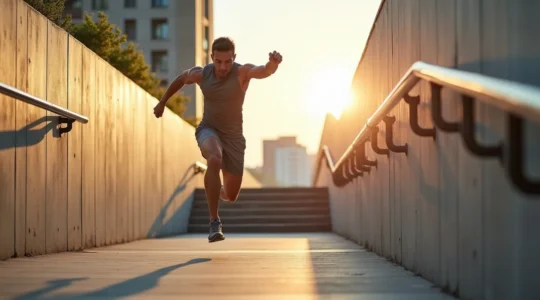
Your daily commute is a wasted opportunity; parkour transforms it from a monotonous chore into a dynamic, skill-building training session. Master fundamental safety, like the parkour roll, to dissipate impact before attempting any complex movements. Adopt an “Ambassador Mindset” to…
Read more
Learning an unrelated sport is the secret to breaking performance plateaus by building a diverse “movement library” in your brain. Novelty forces neuroplasticity more effectively than repetitive practice, creating new neural pathways. Cross-training corrects the muscular and cognitive imbalances caused…
Read more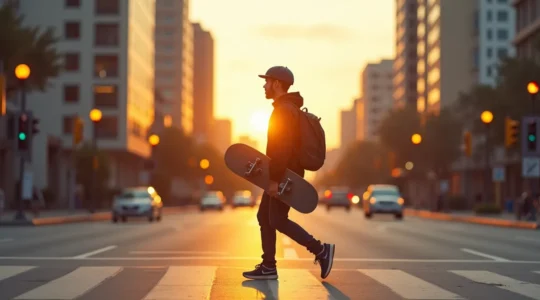
In summary: Effective urban skating isn’t about raw skill, but about a smart system of risk assessment and energy management. Master a hierarchy of braking methods beyond powerslides, which are unreliable in traffic. Choose your gear, especially wheels and wrist…
Read more
Contrary to popular belief, improving your board sport balance has little to do with holding static planks or generic exercises. True stability comes from training your nervous system for dynamic, reactive control. This guide reframes balance not as the act…
Read more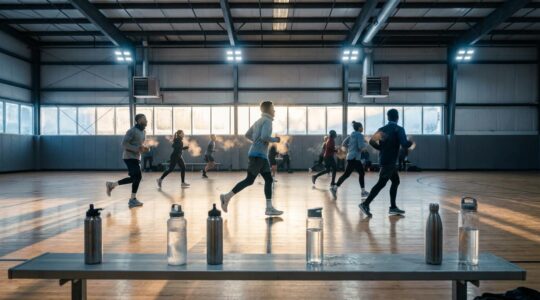
The constant fatigue you feel during winter indoor sports isn’t a lack of fitness; it’s systemic dehydration caused by the gym environment itself actively working against you. Dry, heated air forces massive, unnoticed fluid loss through breathing and “invisible sweat,”…
Read more
For driven executives, the common advice to simply “rest” to avoid burnout is counterproductive. The core problem isn’t a lack of rest, but the misapplication of leisure. This guide reframes recovery not as passive inactivity, but as a strategic tool….
Read more