
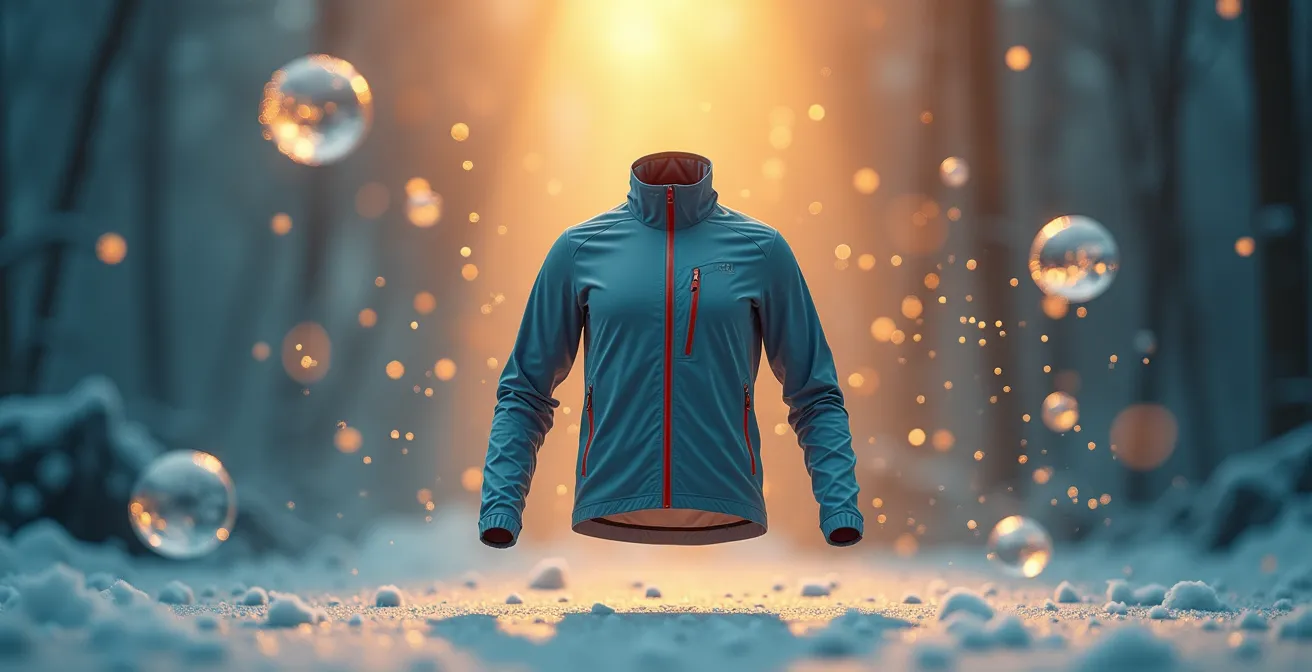
The true cost of sports gear isn’t the price tag; it’s the Total Cost of Ownership (TCO) over its entire lifespan.
- Cheap gear often fails quickly, leading to higher replacement costs that eclipse the initial savings.
- Premium equipment offers superior performance, durability, and retains significant resale value, making it a long-term asset.
Recommendation: Shift from short-term cost-saving to long-term value investing. Calculate the cost-per-use and factor in repairs and resale potential before your next purchase.
For any budget-conscious athlete, the gear aisle presents a constant dilemma. Do you grab the affordable, entry-level option, or do you invest in the high-performance, premium-priced equipment? The immediate savings of cheaper gear are tempting, a siren song to your wallet. We’ve all been there: buying a budget-friendly piece of equipment only to have it fail, tear, or underperform at the worst possible moment, forcing a premature replacement and adding frustration to the cost.
Conventional wisdom offers conflicting advice. Some say, “you get what you pay for,” while others insist you can find bargains if you just “buy what’s on sale.” But these platitudes ignore the fundamental economics at play. With equipment costs rising—one analysis showed a 15.8% increase in wholesale equipment prices in 2021 alone—making a financially sound decision is more critical than ever. But what if the key wasn’t just comparing price tags, but calculating the true long-term value?
This is where the concept of Total Cost of Ownership (TCO) comes in. This guide reframes gear acquisition from a simple purchase into a financial strategy. We will move beyond the initial price to analyze the full lifecycle cost of your equipment. By understanding concepts like cost-per-use, performance depreciation, and resale value, you can make informed decisions that save you significant money over time. This article will show you how to identify genuine technological value, strategically compare new versus used options, avoid common beginner mistakes, and ultimately build a collection of gear that serves you better, lasts longer, and proves to be the cheaper choice in the long run.
To navigate this financial approach to sports equipment, this article breaks down the key factors you need to consider. We’ll explore the real-world value of durability, show you how to spot true innovation, and provide actionable strategies for buying smarter, not just cheaper.
Contents: A Value-Oriented Guide to Sports Gear Investment
- Why a $200 Jacket Is a Bargain if You Run Daily?
- How to Distinguish Real Tech from Marketing Gimmicks?
- New Mid-Range vs. Used High-End: Which Offers Better Performance?
- The ‘All the Gear, No Idea’ Mistake That Embarrasses Beginners
- When to Buy Winter Gear for Maximum Discounts?
- How to Pack for a Camp Where Laundry Is a Luxury?
- Soft vs. Hard Wheels: Which Handles Cracked Pavement Better?
- How to Repair Technical Fabrics Instead of Throwing Them Away?
Why a $200 Jacket Is a Bargain if You Run Daily?
The simplest way to reframe the cost of gear is to stop thinking about its purchase price and start calculating its cost-per-use. A $50 jacket that you wear only 10 times before it tears or loses its water-resistance costs you $5 per run. In contrast, a $200 technical jacket designed for durability, which you wear comfortably for 400 runs, costs you only $0.50 per run. From a value perspective, the expensive jacket is ten times cheaper.
This isn’t just a theoretical exercise. In demanding fields like adventure motorcycling, the difference is stark. Rider analyses consistently show that budget gear often requires replacement every 1-2 years, while high-end equipment can last 5 to 8 years under heavy use. On long journeys through changing climates, the value isn’t just monetary; it’s about safety, comfort, and the reliability that prevents a trip from being ruined. The initial investment is amortized over hundreds of hours of dependable performance.
The core principle is that durability is a feature you pay for, and it delivers returns with every use. Cheap materials and poor construction lead to a rapid performance depreciation. A budget item may function adequately for a short period, but it quickly loses its core attributes—whether it’s a running shoe’s cushioning or a jacket’s breathability. The premium item is engineered to maintain its performance characteristics for a much larger portion of its lifespan, delivering consistent value from the first day to the last.
Ultimately, frequent replacement of cheap gear creates a cycle of spending that often exceeds the one-time cost of a single, high-quality item. When you buy for the long run, you are making an investment in uninterrupted training and reliability, which has a tangible financial benefit.
How to Distinguish Real Tech from Marketing Gimmicks?
The term “technology” is one of the most overused in sports marketing. Brands often tout proprietary names and flashy features that offer little real-world benefit. The key to smart investing is to identify genuine innovation that enhances durability, performance, or safety, rather than paying a premium for a gimmick. Real technology is tangible and solves a specific problem; marketing fluff is often vague and focuses on aesthetics.
Consider the difference in waterproof-breathable fabrics. A cheap jacket might be coated with a simple water-repellent spray that wears off after a few uses and offers no breathability, leaving you soaked in sweat. A high-end jacket, however, uses a complex membrane with microscopic pores large enough to let water vapor (sweat) out but too small for water droplets (rain) to get in. This is a real, physical technology that fundamentally changes the user’s experience.

As the image above illustrates, true technical fabric is an engineered system. The value is not in a brand name, but in the measurable performance that stems from its physical structure. To identify this, look for independent reviews, quantifiable performance metrics (like waterproof ratings in ‘mm’ or breathability in ‘g/m²’), and proven materials from reputable third-party suppliers like Gore-Tex or Polartec. These are indicators of genuine R&D, not just a clever marketing campaign.
This sentiment is echoed by professionals across many fields. As Production Sound Mixer Henri Rapp notes on the philosophy of equipment purchasing:
While there is a difference between ‘best gear’ and ‘gear best for you currently’, the price is often an indicator of what you are paying for. I believe that more often than not, spending a little more on better equipment will save you money in the long run. What’s the point in buying equipment you are going to have to replace shortly because it’s not at the level you need? Buy once, cry once!
– Henri Rapp, Production Sound Mixer & Location Sound Recordist
Ignore claims about “energy-returning” patterns or “aerodynamic” stitching unless they are backed by independent, verifiable data. Focus on the core construction: the quality of the zippers (e.g., YKK), the type of seams (taped vs. standard), and the material’s composition. These are the boring but crucial details that define an item’s true worth.
New Mid-Range vs. Used High-End: Which Offers Better Performance?
One of the savviest strategies for a value-oriented athlete is to explore the second-hand market for premium gear. A brand-new, mid-range item might seem like a safe bet, but it often depreciates faster and underperforms a used, top-tier product. The high-end item was built with superior materials and engineering from the start, so even with some wear, its baseline performance can still exceed that of a new but lower-quality piece.
The key is understanding the Total Cost of Ownership, which includes initial cost, lifespan, repair frequency, and resale value. High-end gear, even when purchased used, often wins on a TCO basis. This is because its superior construction leads to a longer useful life and it retains a much higher percentage of its value when you decide to sell it. A cheap item, new or used, is an expense; a quality item is an asset that depreciates slowly.
This comparison from an analysis of off-road suspensions clearly illustrates the financial trade-offs. While the numbers are specific, the principles apply universally to sports gear. As one comparative analysis demonstrates, the initial cost is only a small part of the story.
| Factor | New Mid-Range | Used High-End |
|---|---|---|
| Initial Cost | $100-150 | $150-200 |
| Expected Lifespan | 2-3 years | 5-8 years |
| Repair Frequency | Every 6-12 months | Every 18-24 months |
| Resale Value (% retained) | 20-30% | 50-60% |
| Performance Consistency | Degrades after year 1 | Maintains through year 4 |
The table shows that the higher initial cost of the used high-end item is quickly offset by its longer lifespan, lower repair frequency, and vastly superior resale value. Furthermore, the “Performance Consistency” metric is crucial; the mid-range item’s value diminishes rapidly as it wears out, while the high-end item performs at its peak for longer. Sporting goods often carry a 30-50% markup from wholesale to retail, which means there is significant room for value retention in premium brands that isn’t present in their budget counterparts.
When shopping used, inspect items carefully for critical wear and tear. Look for reputable sellers and platforms that offer buyer protection. For many athletes, this strategy provides access to elite-level performance at a mid-range budget.
The ‘All the Gear, No Idea’ Mistake That Embarrasses Beginners
A common pitfall for newcomers to a sport is the “All the Gear, No Idea” syndrome: investing heavily in top-of-the-line equipment across the board before developing the skills or consistency to justify it. This not only leads to wasted money but can also be a source of embarrassment. A value-oriented approach for a beginner is not about buying everything cheap; it’s about being strategic and prioritizing investments where they matter most.
For most sports, one or two pieces of equipment are critical for safety, injury prevention, and enjoyment, while others are peripheral. For a runner, the shoes are paramount. Running coaches often recommend beginners commit to spending at least $120 on their first pair of shoes. A proper fit from a specialty store can help prevent common injuries, which are far more expensive and frustrating than the cost of good footwear. With a typical lifespan of 300-500 miles, quality running shoes are a foundational investment, not a luxury.
Conversely, spending hundreds on a GPS watch or compression gear before you’ve even established a consistent running habit is a poor allocation of capital. The smart strategy is to invest heavily in the core item and go basic on everything else. As you progress and your needs become clearer, you can upgrade other items incrementally. This approach ensures your money is working for you, not just for show.
Action Plan: Smart Gear Acquisition for Beginners
- Start with quality footwear as priority #1 investment; it’s your connection to the ground and key for injury prevention.
- Rent or borrow expensive, specialized gear (like skis or a high-end bicycle) for initial testing before committing to a purchase.
- Build one high-quality base layer and outerwear system first; focus on a versatile jacket and pants that can handle various conditions.
- Add specialized items only after establishing a consistent practice and identifying a specific need that your current gear doesn’t meet.
- Focus on versatile pieces that work across multiple activities to maximize their cost-per-use value.
This phased investment strategy allows you to learn the sport, understand your personal needs and preferences, and make informed purchasing decisions when it’s time to upgrade. It’s the most effective way to build a high-performing gear collection without breaking the bank.
When to Buy Winter Gear for Maximum Discounts?
Part of mastering the Total Cost of Ownership is minimizing the initial “I” in the TCO equation: the investment. For seasonal sports like skiing, snowboarding, or winter running, timing your purchase is the single most effective way to acquire premium gear at a significant discount. Retailers operate on a predictable cycle, and understanding it can lead to savings of 50% or more.
The worst time to buy is at the peak of the season (e.g., December for ski gear), when demand is highest and prices are firm. The best time is during the off-season or at the very end of the season when retailers are desperate to clear out inventory to make room for next season’s stock. This is when you can find last year’s models—often functionally identical to the new ones—at deep discounts. A model year rollover is a prime opportunity, as brands make minor cosmetic changes and retailers slash prices on the “old” colors.
The following table, based on common retail patterns, provides a roadmap for strategic purchasing. Planning your acquisitions according to this calendar can cut your initial investment dramatically, making high-end gear far more accessible.
This approach to purchasing is a cornerstone of a value-based acquisition strategy. The following seasonal discount calendar outlines the best times to find deals.
| Time Period | Discount Type | Expected Savings | Best For |
|---|---|---|---|
| Black Friday/Cyber Monday | Current season models | 20-30% | Popular items, new tech |
| Late January | First winter markdowns | 25-40% | Winter gear clearance |
| March-April | Deep clearance | 40-60% | Remaining winter stock |
| July (Christmas in July) | Warehouse clearing | 30-50% | Off-season purchases |
| Model year rollover | Previous year models | 30-50% | Functionally identical items |
Buying off-season requires patience and foresight, but the financial rewards are substantial. It allows you to adopt a “quality over quantity” mindset. Instead of buying multiple cheap items on impulse, you can save for one premium piece and acquire it at the optimal time.
By combining this timing strategy with the TCO framework, you attack the cost problem from both ends: lowering the initial price while maximizing the long-term value. This is the hallmark of a truly budget-conscious and savvy athlete.
How to Pack for a Camp Where Laundry Is a Luxury?
The value of premium gear becomes crystal clear in situations where space, weight, and hygiene are critical constraints, such as a multi-day camping trip or adventure race. In these scenarios, the superior performance of technical fabrics isn’t a luxury; it’s a fundamental component of success and comfort. This is where the higher initial cost of an item pays for itself through utility and efficiency.
Consider the case of a base layer shirt. You could pack five $20 cotton t-shirts for a five-day trip. They are bulky, heavy when wet, and will hold odor after a single day’s use. Alternatively, you could pack one $100 merino wool shirt. Merino wool is naturally antimicrobial, meaning it can be worn for multiple days without developing odor. It also regulates temperature effectively and insulates when wet. The single merino shirt replaces five cotton shirts, resulting in a massive reduction in pack weight and volume while maintaining hygiene.
This is a direct application of the cost-per-use principle in a specific context. The merino shirt’s value isn’t just its $100 price tag; it’s in its ability to do the work of $100 worth of inferior products while providing superior performance. The same logic applies to other gear. A high-quality, packable down jacket provides warmth equivalent to a much heavier and bulkier synthetic fleece. A pair of quick-drying technical pants is far more practical than a pair of jeans that, once wet, may not dry for the entire trip.
In these environments, cheap gear becomes a liability. It fails to perform, adds unnecessary weight, and can even compromise safety. Investing in a few key pieces of high-performance apparel is a strategic decision that enhances the entire experience. It’s about packing smarter, not just packing more.
By focusing on multi-use, high-performance items, you reduce clutter and increase your capability. The upfront cost is an investment in a lighter pack, greater comfort, and the freedom to focus on the adventure, not on your gear’s shortcomings.
Soft vs. Hard Wheels: Which Handles Cracked Pavement Better?
The debate over component choices, like skateboard or inline skate wheels, is a perfect microcosm of the cheap vs. expensive dilemma. The decision isn’t just about a single specification like hardness (durometer); it’s about the quality of the underlying material and its impact on performance, durability, and the longevity of the entire setup. This is where performance depreciation becomes a critical factor in your TCO calculation.
For skating on rough, cracked pavement, softer wheels (typically 78A-85A durometer) are generally preferred because they absorb vibrations and provide better grip. However, not all soft wheels are created equal. A cheap soft wheel is often made from low-quality urethane. While soft, it will have poor “rebound”—the ability to spring back into shape after being compressed. This results in a sluggish, slow ride and causes the wheel to wear down incredibly fast, a process known as “chunking,” where pieces of the wheel break off.
A high-quality soft wheel from a reputable brand uses a superior urethane formula. It provides the same vibration absorption but with high rebound, creating a fast, smooth, and energetic ride. It is also far more durable and will resist chunking, lasting many times longer than its cheaper counterpart. The extra $20-$30 for a set of premium wheels is an investment that pays dividends in both performance and lifespan. The cheaper wheels will need to be replaced so frequently that their total cost will quickly surpass the premium set, all while delivering a subpar experience.
When selecting components, look beyond the basic specs. Consider these factors as indicators of quality:
- Urethane Rebound Quality: A snappy, energetic feel is a sign of a high-quality formula.
- Vibration Transfer: Better wheels protect other components, like bearings and frames, from excessive vibration, extending their life.
- Acoustic Signature: Quality urethane often has a quieter, more solid sound on pavement compared to the rattly noise of cheap plastic-like wheels.
Ultimately, investing in quality components is about buying performance and durability. Cheap parts will not only wear out faster but will also actively hinder your progression and enjoyment of the sport, making them a very expensive bargain indeed.
Key Takeaways
- Shift your mindset from purchase price to Total Cost of Ownership (TCO) by factoring in lifespan, repairs, and resale value.
- Prioritize investment in core equipment critical for safety and performance, while being frugal on non-essential accessories.
- Use off-season sales and the second-hand market to acquire premium gear at mid-range prices, maximizing your return on investment.
How to Repair Technical Fabrics Instead of Throwing Them Away?
The ultimate expression of a value-oriented mindset is extending the life of your gear through maintenance and repair. The “throwaway culture” associated with cheap equipment is not only environmentally wasteful but also financially draining. High-quality gear is often designed to be repairable, which dramatically lowers its Total Cost of Ownership and solidifies its status as a long-term investment.
Many premium outdoor brands even offer their own repair services or provide detailed guides for DIY fixes. This commitment to longevity is a hallmark of a quality product. A small tear in a cheap jacket might be a death sentence, but in a technical shell, it’s an opportunity for a simple, effective repair. An analysis shows that cheap gear often loses up to 50% of its value immediately after purchase, making it essentially a disposable item. In contrast, well-maintained premium gear retains its value far better, partly because its repairability is a known feature.
Adopting a repair-first mentality requires a small investment in tools and knowledge but pays huge dividends. Here is a simple framework for addressing common damage in technical apparel:
- Level 1 (Field Repairs): For minor rips and punctures on the trail, use durable gear tape like Tenacious Tape. For small seam leaks, a gear-aid sealant can provide a quick, waterproof fix to get you home.
- Level 2 (At-Home Advanced): For more involved issues, you can re-apply a Durable Water Repellent (DWR) coating to restore water resistance, carefully sew non-taped seams, or even replace a broken zipper with a kit.
- Level 3 (Professional Service): For major structural damage, such as delamination (where fabric layers separate) or large tears in critical areas, it’s time to use the manufacturer’s repair service or a specialized third-party repair shop.
Before purchasing an expensive item, research the manufacturer’s warranty and repair policies. A brand that stands behind its product with a lifetime warranty and robust repair program is making a clear statement about the gear’s intended longevity.
Start applying a Total Cost of Ownership mindset to your next gear purchase. By choosing durable, repairable products and timing your acquisitions, you will build a collection that performs better, lasts longer, and ultimately costs you far less over time.